Abstract
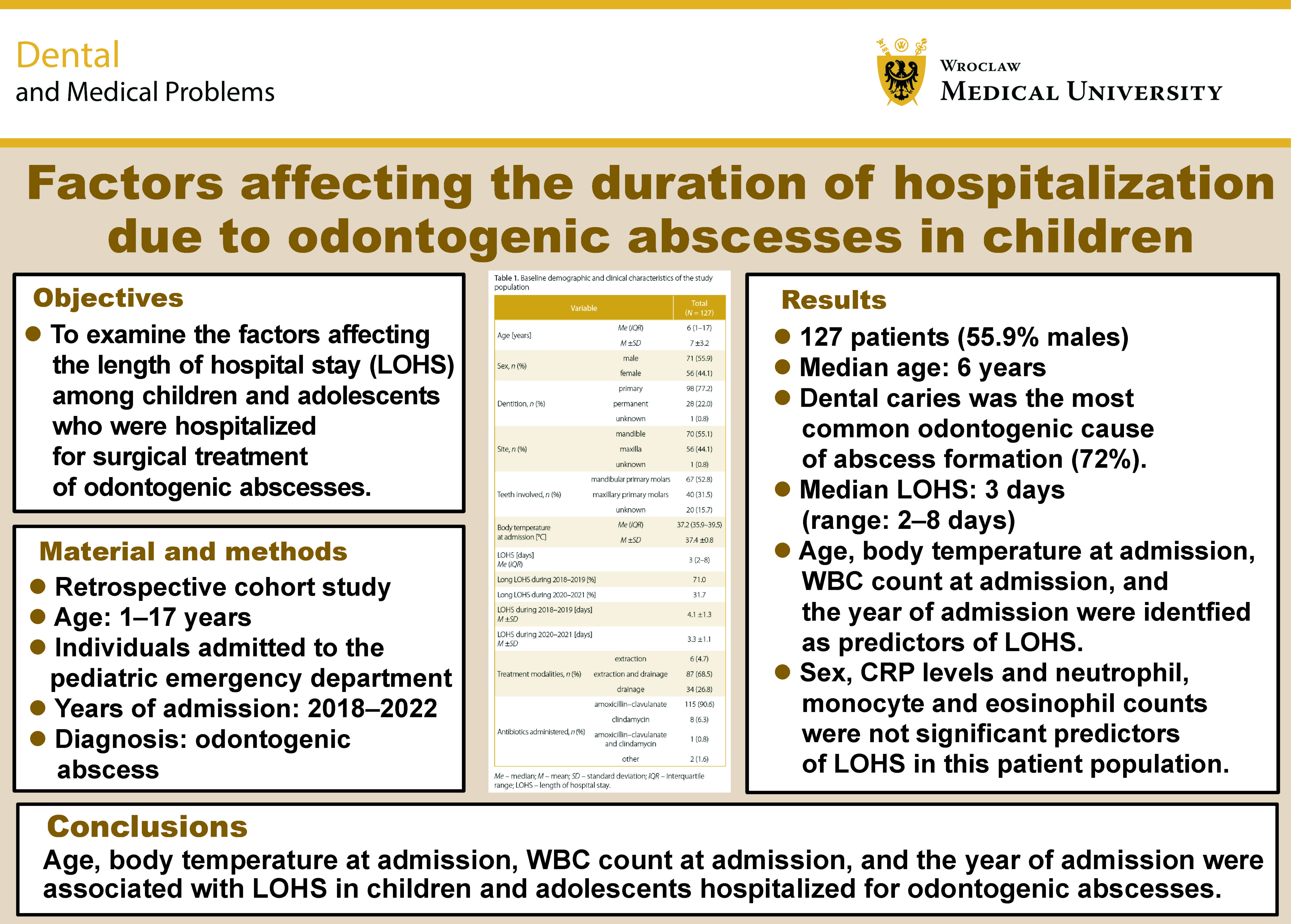
Background. The spread of an odontogenic abscess can have serious consequences and may result in severe morbidity or death. There is no consensus regarding the factors that may predict the length of hospital stay (LOHS) in children hospitalized for odontogenic abscesses.
Objectives. The aim of the study was to examine the factors affecting LOHS among children and adolescents who were hospitalized for surgical treatment of odontogenic abscesses.
Material and methods. A retrospective cohort study included children and adolescents aged 1–17 years who were admitted to the pediatric emergency department of the Scheneider Children’s Medical Center of Israel between 2018 and 2022 for a dentoalveolar or odontogenic abscess.
Results. In total, 127 patients (55.9% male) with a median age of 6 years were included. Dental caries was the most common odontogenic cause of abscess formation (72%). The median LOHS was 3 days (range: 2–8 days). The logistic regression analysis identified age, body temperature at admission, white blood cell (WBC) count at admission, and the year of admission as predictors of LOHS, explaining 44.9% of the model’s variance. Sex, C-reactive protein (CRP) levels and neutrophil, monocyte and eosinophil counts were not significant predictors of LOHS in this patient population.
Conclusions. Age, body temperature at admission, WBC count at admission, and the year of admission were associated with LOHS in children and adolescents hospitalized for odontogenic abscesses.
Keywords: pediatric dentistry, hospitalization, dental abscess, blood counts
Introduction
Odontogenic abscesses are infectious processes whose severity depends on the virulence of the causative bacteria, regional anatomy and individual resistance factors. Until the end of the last century, odontogenic abscesses received relatively limited research attention. Since then, it has become clear that the spread of an odontogenic abscess can have serious consequences and may lead to severe morbidity and even death.1 Management requires prompt intervention, such as root canal treatment, periodontal treatment or extraction, to eliminate the source of infection and prevent its further spread. In children with unerupted teeth, such interventions may also minimize the risk of damage to adjacent tooth germs and surrounding tissues.
Odontogenic and dentoalveolar abscesses are localized collections of purulent fluid in the alveolar bone at the tooth root apex. These abscesses are usually secondary to caries, trauma, deep restorations, or unsuccessful root canal treatment. Following disruption of pulp integrity and bacterial invasion of the pulp chamber, microorganisms may colonize the root canal system, form biofilms and cause acute inflammation, leading to abscess formation.1, 2, 3 The symptoms of an acute odontogenic abscess include pain, swelling and erythema, which are usually localized to the area of the affected tooth. The nature of the infection and the extent of its spread also depend on the individual’s immune response.4 If an abscess is not adequately treated at an early stage, the infection may progress and spread rapidly to nearby anatomical structures, causing serious complications such as sepsis, cavernous sinus thrombosis (CST), brain abscess, septic shock, and even death.1, 2, 3
Children presenting with facial swelling or cellulitis of odontogenic origin require prompt clinical assessment and treatment aimed at eliminating the source of infection, including surgical drainage when indicated. If the tooth is not restorable, extraction is indicated. In otherwise healthy children with localized infections and no systemic involvement, antibiotic treatment is unnecessary following the surgical procedure. Analgesics may be administered as needed. Signs suggesting systemic involvement and sepsis include fever, weakness, facial asymmetry, facial swelling, lymphadenopathy, tachycardia, dysphagia, and respiratory distress. These findings require urgent clinical evaluation and treatment of the infection source, with intravenous antibiotics and hospitalization when clinically indicated. Laboratory evaluation includes a complete blood count (CBC), measurement of C-reactive protein (CRP) levels, and bacterial culture.5, 6
The various components of the CBC may serve as sensitive indicators of a patient’s physiological and pathological status. The white blood cell (WBC) count helps assess infectious and non-infectious diseases.7 White blood cells contribute to immune defense by producing, transporting and distributing antibodies. White blood cell counts may increase in response to acute infection, trauma or inflammation. In some conditions, such as sepsis, the increase is so pronounced that it resembles that observed in leukemia.8 C-reactive protein is involved in the innate immune system response. It is synthesized primarily in the liver and increases following the release of interleukin-1 by macrophages in areas of damaged tissue. C-reactive protein levels increase in response to systemic inflammation, infection, vascular inflammation, or autoimmune diseases. Increased CRP levels activate neutrophils, eliminate antigens and activate the complement system.9 In healthy individuals, serum CRP concentrations vary from 0 mg/L to 3 mg/L, depending on the inflammatory processes occurring in the body. During an acute inflammatory response, serum CRP levels begin to rise within a few hours. The association between CRP concentrations and the severity and duration of the infection makes CRP a highly sensitive marker of inflammation. Because leukocyte lifespans are 5–6 days, CRP levels more accurately reflect the progression of infection, whereas WBC counts provide less reliable information about the timing of the onset of infection.4, 10, 11
Length of hospital stay (LOHS) is an important healthcare outcome. Prolonged LOHS is associated with an increased risk of complications, including surgical-site and other hospital-acquired infections.12 In children, prolonged hospitalization may also impose a greater financial burden on families and the healthcare system, as well as cause emotional stress for children and their parents.13 Therefore, analyzing factors associated with LOHS is critical to reducing the burden on children, families and healthcare services.
There is no consensus regarding the factors that may predict LOHS among children hospitalized for odontogenic abscesses. We retrospectively examined the factors associated with LOHS among children and adolescents hospitalized for surgical treatment of odontogenic abscesses. Specifically, we hypothesized that serum CRP levels and CBC parameters measured at hospital admission would correlate with disease severity and could predict LOHS.
Material and methods
Study design and setting
This retrospective cohort study was conducted in the Scheneider Children’s Medical Center of Israel affiliated with Rabin Medical Center, Petah Tikva, Israel. The study was approved by the Helsinki Committee at Rabin Medical Center (approval No. RMC-0601-21). The requirement for informed consent was waived due to the study’s retrospective design. The study was reported in accordance with the Strengthening the Reporting of Observational Studies in Epidemiology (STROBE) statement, using the checklist for cohort studies.
Participants
The electronic medical records of consecutive patients aged 1–17 years who presented to the pediatric emergency department of Scheneider Children’s Medical Center of Israel with a dentoalveolar or odontogenic abscess and were hospitalized in the department of oral and maxillofacial surgery between 2018 and 2022 were reviewed.
Children were hospitalized if at least one of the following criteria was met: airway compromise; uncontrolled pain; eating difficulty; significant facial swelling; increase in facial swelling for more than 4 days despite appropriate oral antibiotic treatment; poor adherence to oral antibiotic treatment; or facial swelling accompanied by persistent fever of dental origin for more than 48 h.
The assessment of risk factors related to a child’s physical status is essential before surgical intervention. The American Society of Anesthesiologists (ASA) Physical Status (ASA-PS) Classification System is a widely accepted tool for preoperative assessment.14 Accordingly, ASA-PS class I or II was an additional inclusion criterion. Patients were excluded if they had an ASA-PS classification higher than II, diabetes, an autoimmune disease, or immunosuppression, if they had received immunosuppressive therapy, or if their medical records were incomplete.
Data collection
The primary outcome was LOHS. Data extracted from the electronic medical records included age, sex, year of hospitalization, diagnosis, teeth involved, body temperature at admission, treatment administered, serum CRP levels, and CBC parameters measured at admission as variables potentially associated with LOHS.
Statistical analysis
The statistical analysis was performed using the IBM SPSS Statistics for Windows software, v. 29.0 (IBM Corp., Armonk, USA), and R, v. 4.4.0 (The R Foundation for Statistical Computing, Vienna, Austria).
The median LOHS was 3 days. Accordingly, patients were divided into 2 groups: a short LOHS group (≤3 days); and a long LOHS group (>3 days). Student’s t-test was used to compare the means of continuous variables between the short and long LOHS groups. An F test was conducted to assess differences in group variances, and Welch’s t-test was applied when the variances differed significantly. The χ2 test of independence was implemented to assess correlations between categorical variables and LOHS group. Fisher’s exact test was used when expected cell counts were <5.
The binomial test was conducted to compare the proportions of infections involving upper molars vs. lower molars, those attributable to caries vs. other odontogenic causes, those involving primary vs. permanent teeth, upper teeth vs. lower teeth, those treated with both extraction and drainage vs. either procedure alone, and those treated with amoxicillin–clavulanate vs. other antibiotics. Odds ratios (ORs) and 95% confidence intervals (95% CIs) were calculated.
The logistic regression analysis was performed using variables that were statistically significant or approached statistical significance in the univariate analyses to identify factors associated with longer LOHS. P-values were adjusted for multiple comparisons using the Benjamini–Hochberg procedure.
Results
Of the 175 consecutive patient medical records reviewed, 127 patients (55.9% male) met the eligibility criteria and were included in the analysis. The distribution of patients by admission year was as follows: 2018 – 27 (21.3%); 2019 – 33 (26.0%); 2020 – 31 (24.4%); 2021 – 31 (24.4%); 2022 – 5 (3.9%). Excluding 2022, for which only 5 patients were included (data collection was only conducted until the end of 2022), a mean of 30.25 individuals were hospitalized annually between 2018 and 2021 (range: 27–33), demonstrating steady annual enrollment with little variation. Consequently, the data from these 4 years was grouped for further analysis.
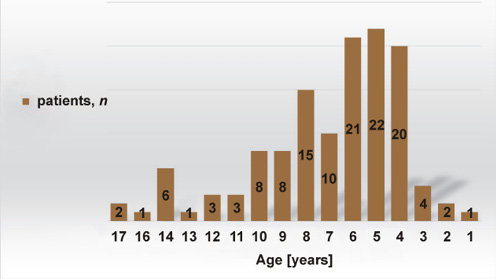
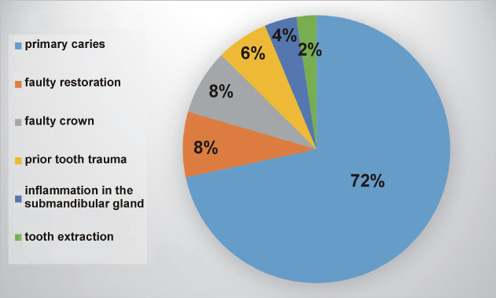
The patients’ median age was 7 years (range: 1–17 years), and the mean age was 7 ±3.2 years (Figure 1). Table 1 summarizes the demographic and clinical characteristics of the study population. The median body temperature at admission was 37.2°C (range: 35.9–39.5°C), and the mean temperature was 37.4 ±0.8°C. The most common odontogenic cause of abscess formation was primary caries (72%; p < 0.001 compared with other causes) (Figure 2). Most abscesses (77.2%) involved primary teeth, and more than half involved mandibular teeth (55.1%), with lower primary molars accounting for 52.8% of cases. The majority of patients (68.5%) underwent both extraction and drainage. The most common antibiotic administered was penicillin (90.6%). The median LOHS was 3 days (range: 2–8 days). Infections involving primary teeth were significantly more frequent than those involving permanent teeth (77.2% vs. 22.1%, respectively; p < 0.001). Similarly, infections involving mandibular teeth were more prevalent than those involving maxillary teeth (55.1% vs. 44.1%, respectively; p = 0.025), and mandibular molar involvement was more frequent than maxillary molar involvement (52.8% vs. 31.5%, respectively; p = 0.004). Combined extraction and drainage were performed significantly more often than either procedure alone (68.5%; p < 0.001).
The univariate analysis showed that patients hospitalized during 2020–2021 had a significantly shorter LOHS than those hospitalized during 2018–2019 (OR = 0.190, 95% CI: 0.088, 0.410; p < 0.001). Female patients demonstrated a trend for a longer LOHS than male patients, although the association was not statistically significant (OR = 1.822, 95% CI: 0.897, 3.701; p = 0.096). Infections originating from mandibular molars showed a trend for a longer LOHS than those originating from maxillary molars (OR = 2.436, 95% CI: 0.941, 6.306; p = 0.063).
Longer LOHS was associated with higher mean body temperature at admission (37.58 ±0.83°C vs. 37.19 ±0.67°C; p = 0.005), higher mean WBC counts (14.32 ±4.76 vs. 11.72 ±3.36 × 10³ cells/μL; p = 0.001), higher mean neutrophil counts (10.37 ±4.51 vs. 7.71 ±2.94 × 10³ cells/μL; p = 0.0001) and lower mean eosinophil counts (0.20 ±0.20 vs. 0.27 ±0.23 × 10³ cells/μL; p = 0.049) compared with the short LOHS group. Additionally, patients in the long LOHS group tended to be older (7.58 ±3.33 years vs. 6.48 ±3.00 years; p = 0.052) and had higher mean monocyte counts (0.76 ±0.29 vs. 0.67 ±0.26 × 10³ cells/μL; p = 0.066). No statistically significant associations were observed between LOHS and the type of antibiotics administered, reason for hospitalization, teeth involved, type of treatment, CRP levels, red blood cell counts, hemoglobin levels, hematocrit, mean corpuscular volume, mean corpuscular hemoglobin concentration, platelet counts, or lymphocyte, basophil or leukocyte counts. Additionally, elevated CRP levels were not significantly associated with the dentition type (primary or permanent) affected by the abscess.
The logistic regression model was statistically significant (χ2(9) = 45.577; p < 0.001). The model explained 44.9% (Nagelkerke R2) of the variance in LOHS. The odds of a longer LOHS increased significantly with age, body temperature at admission, WBC count at admission, and differed according to the period of admission. Specifically, the probability of a longer LOHS increased by a factor of 1.215 (95% CI: 1.035, 1.426; p = 0.039) for each additional year of age, by a factor of 2.339 (95% CI: 1.204, 4.545; p = 0.036) for each 1°C increase in body temperature, and by a factor of 1.580 (95% CI: 1.137, 2.197; p = 0.029) for each increase of 1 × 10³ cells/μL in WBC count. Patients admitted during 2020–2021 had significantly lower odds of a longer LOHS than those admitted during 2018–2019 (OR = 0.094, 95% CI: 0.032, 0.278; p < 0.001). Sex, CRP levels, and neutrophil, monocyte and eosinophil counts were not significant predictors of longer LOHS in this patient population.
Discussion
The present study assessed parameters associated with LOHS among children and adolescents aged 1–17 years who were hospitalized for odontogenic abscesses between 2018 and 2022.
A slight male predominance was observed in the present cohort, consistent with previous studies on surgical treatment of odontogenic abscesses.4, 15, 16, 17 In contrast to other studies, which reported longer hospitalization among patients with acute odontogenic abscesses and elevated CRP levels,4, 18 we found that CRP levels at admission were not significant predictors of LOHS. Previous studies have also identified CRP as a marker of infection severity.18, 19 In our cohort, higher WBC counts, older age and elevated body temperature at admission were significantly associated with longer LOHS. The correlation between older age and longer LOHS is consistent with previous reports.16 Other studies have also noted a positive association between WBC counts and LOHS in patients with odontogenic abscesses.16, 17, 18 Higher WBC counts have been linked to an increased risk for re-operation.20
In the present cohort, the cause of abscess formation, sex, teeth involved, type of treatment, and type of antibiotics administered were not significantly associated with LOHS. Mandibular involvement was more likely to cause a severe infection than maxillary involvement, presumably due to anatomical differences, the greater vascularity of the maxilla, and higher bone density in the mandible.4, 21, 22 However, mandibular infections tend to occur in older patients, whereas maxillary infections are more common in younger patients.16, 17
Our model also showed that patients admitted to the hospital during 2020–2021 had significantly lower odds of a longer LOHS than those admitted during 2018–2019. This difference may be explained by the coronavirus disease 2019 (COVID-19) pandemic. As in other countries, guidance issued by the Israeli Ministry of Health during the first COVID-19 lockdown instructed citizens to remain at home, seek medical advice over telephone whenever feasible, and refrain from visiting hospitals and dental clinics unless urgent care was required. These guidelines aimed to reduce the severe acute respiratory syndrome coronavirus 2 (SARS-CoV-2) transmission while preserving hospital emergency capacity for patients with COVID-19. This might be the reason for the decline in LOHS during 2020–2021 compared to 2018–2019 in pediatric patients with odontogenic infections. Furthermore, concerns about SARS-CoV-2 exposure may have discouraged patients from seeking hospital-based care. Previous studies have similarly reported that despite the implementation of safety measures, patients experienced anxiety about attending dental appointments during the COVID-19 pandemic.23, 24, 25, 26 Instead, they may have sought treatment from community-based pediatric dentists. This substantial decline implies that a considerable portion of the cases that were routinely referred to the hospital in the pre-pandemic period might have been effectively managed by community-based pediatric dentists.
The median LOHS reported in studies involving adults is 6 days,27 compared with 3 days in the present pediatric cohort, although considerable variation has been reported in the literature.28 Several risk factors for prolonged hospitalization have been identified in adults.27 Coexisting systemic conditions have been strongly associated with the severity of odontogenic infections and LOHS.29 Among numerous comorbidities, diabetes stands out as a factor correlated with prolonged LOHS.30 Advanced age is also associated with more severe odontogenic infections and longer LOHS.31 Mandibular involvement is linked to longer LOHS due to poor vascularity.21 Reports correlate increased LOHS with penicillin allergy.32 The spread of infection through interconnected fascial spaces in the head and neck region may also increase LOHS.33 Furthermore, a longer interval between initial incision and drainage and definitive removal of the infection source has been associated with the prolonged hospitalization.27 When comparing the outcomes of odontogenic infections with those of post-traumatic enophthalmos, the morbidity was lower in the adult group.23 Because the clinical presentation of orbital floor fractures differs between children and adults, the diagnosis and treatment of orbital fractures in children may be more challenging. For example, bone graft reconstruction has been reported to yield better outcomes in adults.23
The majority of studies evaluating the factors that affect LOHS in patients hospitalized for odontogenic abscesses have included both adults and children. In contrast, the present study evaluated only children and adolescents, with a median age of 7 years. Because the pediatric population differs from the adult population, this study may help identify factors specifically correlated with LOHS in children and adolescents.
Dental infections requiring hospitalization are associated with substantial morbidity and, occasionally, mortality. They may also impose a considerable financial burden on patients, their families and healthcare systems. Our study provides insights into the characteristics of hospitalized individuals with odontogenic abscesses and analyses patient demographics, clinical characteristics, diagnostic approaches, management strategies, and clinical outcomes.
Severe pain and acute facial swelling are common clinical manifestations of odontogenic infections that may prompt patients to seek emergency care. The median LOHS was 3 days for the short LOHS group. The reported absence of mortality and low frequency of complications suggest favorable clinical outcomes. Nevertheless, the social and financial impact of odontogenic infections remains a significant concern. Consequently, an important clinical question arises: Were all these hospital admissions necessary? A short hospital stay may indicate a rapid clinical resolution, even when surgical intervention is required. Identifying the characteristics of patients with a shorter LOHS may help clinicians determine which children could potentially be managed safely in outpatient settings. In selected cases, community-based treatment provided by a pediatric dentist my be sufficient and could reduce the burden on hospital services, as seen during the COVID-19 pandemic.
Limitations
The limitations of this study primarily arise from its retrospective design, which restricted the available variables and introduced potential sources of bias. The data was obtained from medical records based on existing clinical documentation. Retrospective studies are an important tool for studying diseases. However, they have several limitations owing to their design. Because they rely on medical records that were not originally collected for research purposes, some potentially relevant information may be missing. Differences in treatment approaches between patients and variations in clinical decision-making among healthcare professionals may also have introduced bias. Moreover, the study was conducted at a single medical center and included a relatively small sample, which may limit the generalizability of the findings and lead to bias. Single-arm trials lack randomization and blinding, which limits their capacity to establish treatment effects compared with randomized controlled trials.34 This study included only children referred to a single medical center, and healthcare-seeking behavior during the COVID-19 pandemic may have influenced patient selection. Consequently, some children may have received treatment from community-based pediatric dentists without being referred to the medical center. Future studies using standardized data collection protocols may improve accuracy of the available information.
Conclusions
Age, body temperature at admission and WBC count at admission were independently associated with longer LOHS among children and adolescents hospitalized for odontogenic abscesses. Future studies should further characterize children with shorter hospital stays and determine whether these characteristics could help identify patients who may be safely treated without hospitalization. Clinicians should follow evidence-based protocols and established clinical criteria when defining the treatment plan. Avoiding unnecessary hospitalization may reduce its short- and long-term consequences. These include not only the physical suffering and distress that exert stress on the body but also factors that negatively affect the patient’s psychological state. The practical implication of the present findings is the potential role of community-based dental care in reducing hospital admissions.35, 36
Ethics approval and consent to participate
The study was approved by the Helsinki Committee at Rabin Medical Center, Petah Tikva, Israel (approval No. RMC-0601-21).
Data availability
The datasets generated and/or analyzed during the current study are available from the corresponding author on reasonable request.
Consent for publication
Not applicable.
Use of AI and AI-assisted technologies
Not applicable.