Abstract
Background. Management goals for patients with temporomandibular disorders (TMDs) include reducing pain, improving function and resuming normal daily activities.
Objectives. The present retrospective study compared the effectiveness and efficiency of 2 different gnathological treatment options – temporary bite-raising onlays (TBR) and stabilization splints (SS) – for the management of pain-related TMDs.
Material and methods. Medical records of 86 patients treated in the Department of Orthodontics of the Agostino Gemelli University Hospital IRCCS, Rome, Italy, were retrieved: 43 patients were treated with TBR; and 43 with SS. We included adult patients (aged 18–65 years) of both sexes, with a diagnosis of pain-related TMDs according to the Diagnostic Criteria for Temporomandibular Disorders (DC/TMD), treated with TBR or SS, with no systemic diseases or comorbidities, who provided written informed consent for the use of their clinical data. The outcomes assessed were the presence of pain and reduced mouth opening (<40 mm) at the end of treatment, the number of clinical check-ups and appliance adjustments, the overall treatment duration, self-reported patient discomfort, and the time frame within which patients experienced improvement.
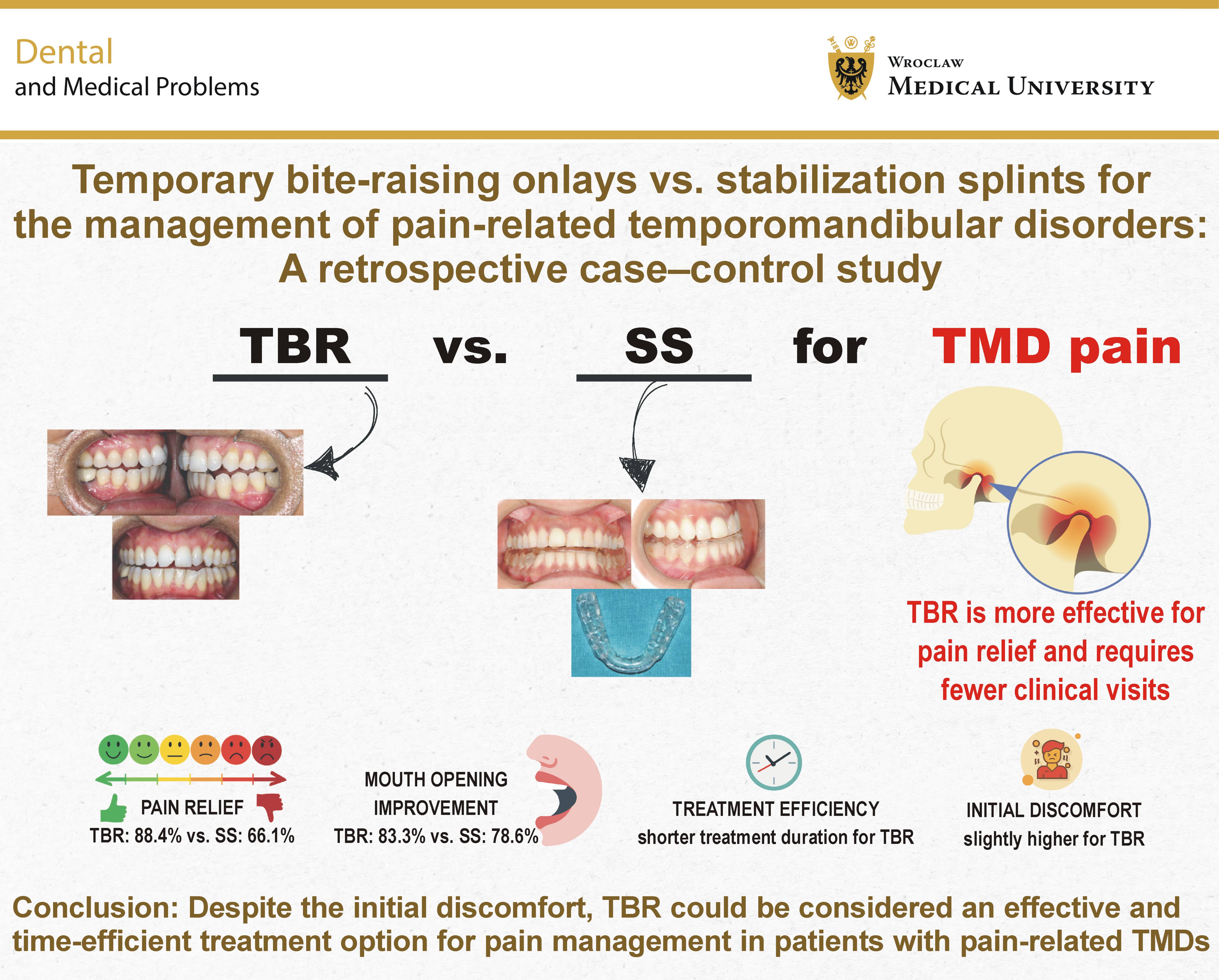
Results. Temporary bite-raising onlays on molars achieved significantly higher pain recovery rates than SS in patients with pain-related TMDs (88.4% vs. 66.1%; p < 0.05). With regard to functional improvement in mouth opening, TBR and SS yielded comparable results, with no statistically significant difference between the groups (83.3% vs. 78.6%). Treatment with TBR was shorter than SS treatment, and required fewer clinical check-ups and repetitive occlusal adjustments. The initial self-reported discomfort was slightly more prevalent among TBR patients than among SS patients, while the initial improvement in pain symptomatology occurred earlier in the SS group. Overall, TBR was associated with a higher, although not statistically significant, prevalence of the initial self-reported discomfort, whereas SS was associated with statistically significantly earlier symptom relief.
Conclusions. Despite the initial discomfort, TBR could be considered an effective and time-efficient treatment option for pain management in patients with pain-related TMDs.
Keywords: mouth rehabilitation, treatment outcome, pain management, temporomandibular joint disorders, occlusal splints
Introduction
The term “temporomandibular disorders” (TMDs) refers to a group of painful and/or dysfunctional conditions affecting the musculoskeletal and neuromuscular systems, specifically involving the temporomandibular joints (TMJs), the muscles of mastication, and other related craniofacial structures. A meta-analysis conducted by Valesan et al. reported that the prevalence of TMDs among adults and elderly people was approx. 38.8%, based on the globally recognized Diagnostic Criteria for Temporomandibular Disorders (DC/TMD).1 The prevalence was higher among females, with a female-to-male ratio of 1.5:1, and was highest among young and middle-aged adults, with a peak occurrence between 20 and 40 years of age.1
Patients with TMDs commonly present with a range of symptoms, including pain, restricted or asymmetric mandibular movements, and TMJ sounds. Pain and discomfort are often localized to the jaw, TMJs, and associated masticatory muscles. Additional symptoms may include earache, a sensation of ear fullness, tinnitus, vertigo, cervicalgia, and headaches. This painful condition can impair patients’ ability to perform essential orofacial functions, such as mastication and speech, thereby negatively affecting their overall quality of life (QoL).2
Temporomandibular disorders frequently follow a recurrent, self-limiting or variable course over time. Current estimates suggest that only 3.6% to 7% of individuals diagnosed with TMDs require therapeutic intervention. Specifically, among patients with painful TMDs, the most recent data indicate that the prevalence of first-onset cases is approx. 3.9%.3
Conservative, reversible, and noninvasive therapies, including self-management instructions, behavioral modification, physical therapy, pharmacotherapy, and orthopedic appliances, are recommended for the management of nearly all TMDs. The therapeutic goals include pain reduction, the reduction of adverse loading, the restoration of function, and the resumption of normal daily activities. Most patients with TMDs experience significant symptom relief with conservative therapy. Long-term studies indicate that 50% to more than 90% of patients report few or no symptoms following conservative treatment. Symptomatic stability typically occurs within 6–12 months of therapy.4, 5
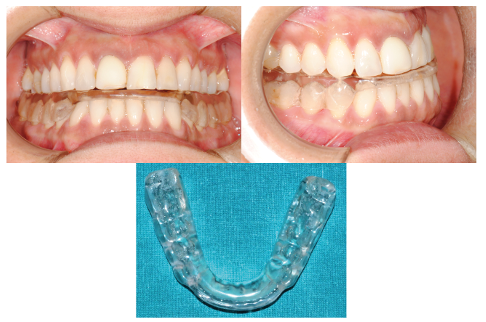
Stabilization splints (SS) are removable orthopedic appliances made of acrylic resin that cover the dental arch (Figure 1). Their indications include masticatory muscle pain and dysfunction, painful TMDs, and altered structural relationships of TMJ. Stabilization splints act by providing occlusal and joint stabilization, creating a smooth contact surface between the dental arches. The main therapeutic goal of SS is to eliminate occlusal prematurities that may generate nociceptive input and, over time, contribute to improper muscle activity. Additionally, SS have been associated with muscle relaxation by reducing parafunctional activity, the protection of the teeth and jaws, the normalization of periodontal proprioception, the modification of the joint space, and the redistribution of condylar shear forces.6
Over time, stabilization splints have emerged as one of the most extensively studied orthopedic therapies for the alleviation of pain in patients with TMDs. A recent systematic review conducted by Pficer et al. concluded that SS may play a significant role in the short-term management of TMDs, although their effectiveness appears to be comparable to that of other therapeutic modalities during long-term follow-up (6–12 months).7
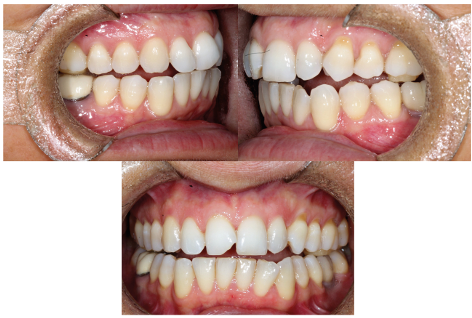
Temporary bite-raising onlays (TBR) are occlusal composite resin wedges bonded to the chewing surfaces of the posterior teeth (Figure 2). The occlusal portion of TBR provides bilaterally balanced occlusal contacts in maximum intercuspation and promotes occlusal disclusion during eccentric jaw movements. The primary advantage of TBR over SSs is their ability to function 24 h a day without requiring patient compliance, while having minimal esthetic impact. Consequently, TBR may be recommended for the management of acute and chronic pain-related TMDs in patients for whom prolonged daily use of SS is required.
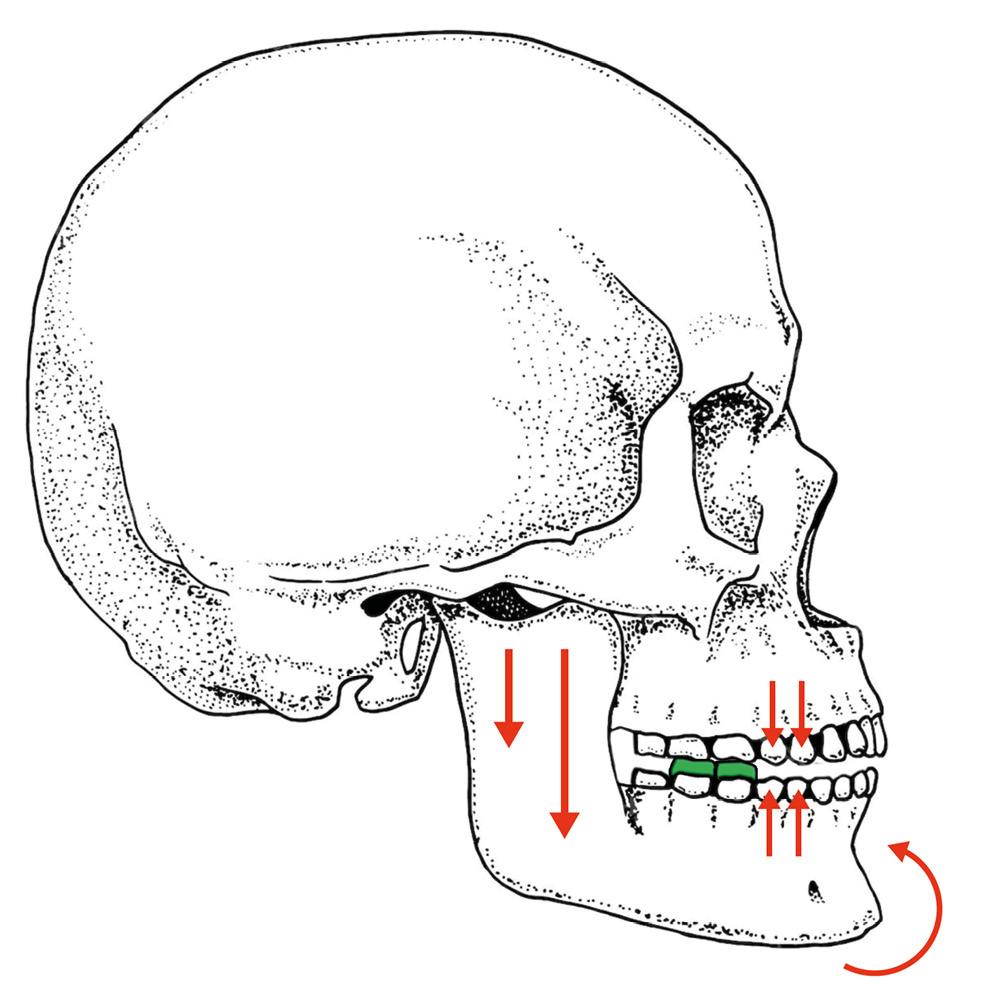
The therapeutic rationale of TBR is analogous to that of SS: The occlusal disengagement achieved through the mechanical interposition of a balanced thickness between the dental arches disrupts the neuromuscular pattern associated with the previous occlusion. The increased vertical dimension resulting from the thickness of the onlays promotes muscle relaxation and soft-tissue decompression (Figure 3).8
In the short term, both SS and TBR can modify the neuromuscular pattern by inhibiting periodontal mechanoreceptors, thereby reducing abnormal muscular activity. In the long term, the uncontrolled tooth extrusion associated with TBR may be clinically advantageous for increasing the occlusal vertical dimension and reducing anterior tooth contact in patients with a deep bite.
To the best of our knowledge, no studies in the literature have directly compared the effectiveness and efficiency of TBR and SS in managing pain and functional symptoms in patients with pain-related TMDs.
This retrospective comparative study aimed to compare the effectiveness and efficiency of TBR and SS in managing pain and functional limitations in patients with pain-related TMDs. The primary objective was to evaluate pain reduction following treatment with TBR (the experimantal group) or SS (the gold standard). The secondary objective was to assess improvement in functional limitations following treatment with either TBR or SS. The tertiary objective was to compare the efficiency of the 2 treatment modalities in terms of the number of clinical check-ups and appliance adjustments, overall treatment duration, patient discomfort, and time to the onset of pain relief.
Material and methods
The present single-center retrospective comparative study was conducted at the Department of Orthodontics of the Agostino Gemelli University Hospital IRCCS, Rome, Italy. The study was reported in accordance with the Strengthening the Reporting of Observational Studies in Epidemiology (STROBE) guidelines (Supplementary material, available on request form the corresponding author.)
As no prior data were available for the primary outcome in the TBR group, the sample size was calculated based on the data published by Ekberg et al., which reported approx. 30% of patients as pain-free in the SS group.9 Assuming that approx. 60% of patients in the TBR group would be asymptomatic, a minimum sample size of 42 patients per group was calculated, with an allocation ratio of 1:1 (type I error = 0.05; type II error = 0.20; power = 80%).
Medical records from the database of the Department of Orthodontics of the Agostino Gemelli University Hospital IRCCS, Rome, Italy, were screened. Eligible subjects were treated consecutively between January 2008 and May 2018 by the same experienced clinician (R.U.). The electronic screening of the medical records was performed by a trained researcher (F.A.).
The eligibility criteria are outlined in Table 1. All patients included in this retrospective comparative study were diagnosed with pain-related TMDs according to the DC/TMD Axis I protocol.10
Clinical assessment was conducted according to the DC/TMD Axis I guidelines, which provide specific diagnostic algorithms for the identification of pain-related TMDs, including myalgia, local myalgia, myofascial pain with referral, arthralgia, and headache attributed to TMDs. Each patient underwent a structured clinical examination performed by trained examiners. The examination included a detailed assessment of TMJs and masticatory muscles through static and dynamic palpation, the measurement of the mandibular range of motion, provocation tests, and the evaluation of joint sounds. The masticatory muscles, including the masseter, temporalis, medial pterygoid, and lateral pterygoid muscles, were palpated bilaterally at predefined sites, using calibrated finger pressure, and pain responses were recorded according to the DC/TMD criteria. The TMJs were assessed for pain during mandibular movements and palpation, as well as for the presence of joint sounds, including clicking and crepitus, detected through auscultation and manual palpation during mandibular function.
The use of DC/TMD ensured a reliable and reproducible diagnostic process, enabling the precise identification of pain-related TMD phenotypes within the study population.
Electronic screening identified 86 patients who met the eligibility criteria (17 males and 69 females; mean age: 37.9 ±13.3 years). Of these, 43 patients were treated with TBR (the experimental group) and 43 with SS (the gold standard).
Both kinds of treatment (SS and TBR) were performed by the same independent, experienced clinician (R.U.).
Stabilization splints were fabricated following an intraoral impression. The SS appliance was designed to provide simultaneous and uniform occlusal contacts between the arches, considered optimal for musculoskeletal stability during tooth contact. Patients were instructed to wear the occlusal splints for 22 h/day, removing them only during meals and oral hygiene procedures. They were advised to report any failure immediately, particularly breakage, loss, or episodes of acute pain, and to attend the clinic in case of emergencies. Every failure, whether identified by the clinician during the scheduled visits or reported by the patient, was recorded in the patient’s clinical file.
Temporary bite-raising onlays were occlusal composite resin wedges (Charisma®; Kulzer, Hanau, Germany) directly modeled in the mouth by the clinician and bonded to the occlusal surfaces of the posterior teeth. The occlusal plane was designed to be flat, allowing protrusive and lateral mandibular movements while ensuring evenly distributed interarch contacts to provide occlusal and orthopedic mandibular stability. The height of TBR was set at 2 mm, representing the minimum thickness required to prevent arch contact during closure and eccentric mandibular movements. Increases in the occlusal vertical dimension were calculated to maintain the interocclusal freeway space (2–5 mm on average). Temporary bite-raising onlays were applied to the upper or lower first and/or second molars, depending on the individual occlusal conditions, to ensure optimal orthopedic mandibular balance in centric occlusion.
At the end of active treatment in both groups, the TBR and SS appliances were removed, and all patients received verbal and written instructions to follow a personalized jaw home-exercise regimen for TMD management. This regimen included exercises for muscle contraction and body movements aimed at alleviating musculoskeletal pain and restoring normal function by reducing inflammation, decreasing and coordinating muscle activity, and promoting tissue repair and regeneration.10, 11 The program for patients with TMD-related muscle pain and/or limited mouth opening included relaxation exercises with diaphragmatic breathing, the self-massage of the masticatory muscles, stretching, and coordination exercises, including proprioceptive training and postural exercises.10, 11, 12 There is a consensus among TMD experts that jaw exercises are effective for patients with myalgia, restricted mouth opening due to the hyperactivity of the jaw-closing muscles, and disc displacement without reduction.13
After SS delivery or TBR placement, patient check-ups were scheduled every 2 weeks during the first 2 months, followed by monthly visits, except in cases requiring emergency assessment.
The primary outcome was self-reported pain at baseline (T0) and at the end of treatment (T1). Pain was assessed using a unidimensional 10-point numeric rating scale (NRS). A score of 0 indicated the absence of pain, whereas scores from 1 to 10 indicated the presence of pain and its intensity. The percentage of patients reporting no pain at T1 was calculated.
The secondary outcome – the functional limitation of mandibular movements – was assessed based on the maximum mouth opening (MMO). The percentage of patients with limited mouth opening at T0 and T1 was recorded. The maximum mouth opening was measured between the incisal edges. In this study, a physiological cut-off of 40 mm was adopted: MMO ≥ 40 mm was considered optimal and indicative of the absence of mandibular limitation, whereas values <40 mm indicated the presence of limitation. The percentage of patients with MMO ≥ 40 mm at T1 was also calculated. In patients presenting with mandibular limitation, the MMO values at both T0 and T1 were recorded.
The tertiary outcomes (efficiency) included:
– the number of repetitive occlusal adjustments and/or resurfacing procedures performed during treatment;
– the number of clinical check-ups;
– treatment duration (from SS delivery or TBR placement to removal, expressed in months);
– patients’ discomfort experienced at the beginning of treatment (such as difficulty with chewing, swallowing or phonation, dental sensitivity, fatigue, and muscle pain); and
– the time to the onset of pain relief, expressed in weeks.
Data for the tertiary outcomes were reported using descriptive statistics.
Other clinical and demographic data, including age at the beginning of treatment, sex, diagnosis according to DC/TMD, the presence of parafunctional activities, and a history of previous gnathological treatment, were collected.
Statistical analysis
An Excel data collection form and data management system were used (Microsoft Excel 2011; Windows, v. 14.0.0; Microsoft Corp., Redmond, USA). All data were entered by a single blinded operator (F.A.). Before data entry, all records were evaluated for accuracy and completeness. Statistical analysis was performed using a superiority approach for all variables. The null hypothesis was that the experimental treatment (the TBR group) was superior to the standard treatment (the SS group) in terms of the absence of pain (a binary primary outcome) at the end of treatment.
For qualitative data, frequencies, proportions, and 95% confidence intervals (CIs) for proportions were calculated. In the bivariate analysis, the proportions were compared using appropriate statistical tests. The χ2 test was used when no more than 20% of the cells in the contingency tables had expected frequencies ≤5 and no cell had an expected frequency <1. When these assumptions were not met, Fisher’s exact test was performed.
For each continuous variable, the mean and standard deviation (M ±SD), and 95% CI were reported. The assumption of normality was assessed using the skewness/kurtosis test, with a normal distribution assumed when p > 0.05. The comparisons of means were performed to evaluate statistically significant differences using the t test, while the Wilcoxon rank-sum test or the Wilcoxon matched-pairs signed-rank test were used where appropriate. When a non-parametric test was used, the median (Me) was also reported. Statistical significance was set at p < 0.05 (5%). The statistician was blinded to group allocation and was external to the research group. Data analysis was performed using the Stata/IC 16 software (StataCorp, College Station, USA).
Results
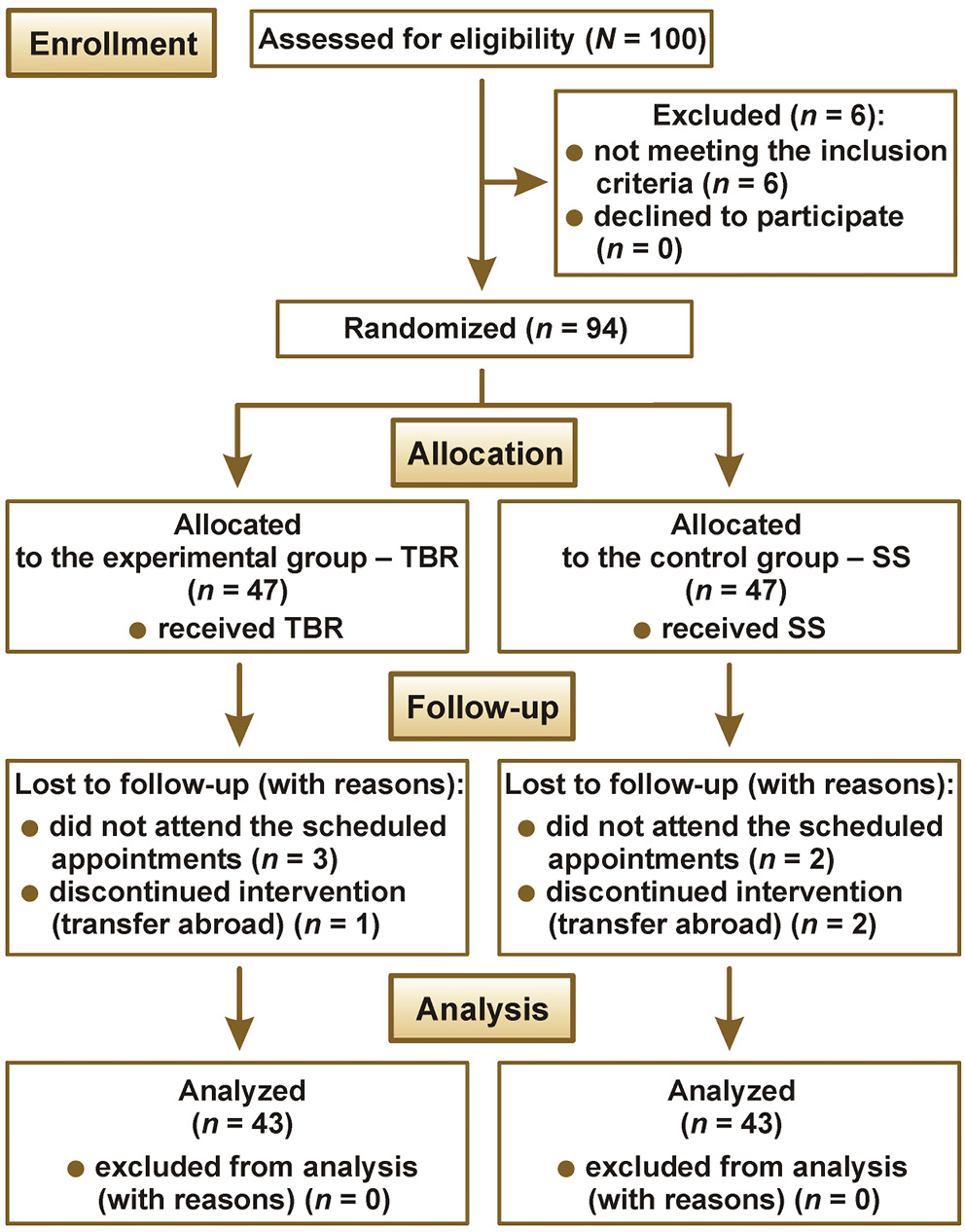
A total of 100 patient records were retrieved. Six patients were excluded from the sampled due to the systemic diseases and comorbidities reported at follow-up. The remaining 94 patients diagnosed with pain-related TMDs were randomly selected and invited to participate in the study. Among these, 8 patients dropped out (3 patients had moved away, and 5 did not attend the scheduled appointments). Written informed consent was obtained from each participant, resulting in a final sample of 86 patients (Figure 4). Detailed demographic and clinical characteristics of the study population are summarized in Table 2.
Primary outcome – pain
At T0, 100% of patients reported pain symptoms. By the end of treatment, 23.3% of patients still reported pain, corresponding to an overall success rate of 76.7%. Complete pain resolution was achieved in 38 patients (88.4%) in the TBR group and 28 patients (66.1%) in the SS group. The difference between the groups was statistically significant (p = 0.011) (Table 3).
Secondary outcome – functional limitation and maximum mouth opening
At T0, a total of 26 patients (30.2% of the study population) reported functional limitation, including 12 patients (27.9%) in the TBR group and 14 patients (32.6%) in the SS group. No statistically significant difference was observed between the groups at baseline (p = 0.639) (Table 4). At this time point, the overall mean MMO was 33.3 ±3.3 mm, with no statistically significant difference between the TBR (32.8 ±3.1 mm) and SS (33.8 ±3.6 mm) groups (p = 0.477).
After treatment, only 2 patients reported functional limitation in the TBR group and 3 in the SS group. No statistically significant difference was observed between the groups post-treatment (p = 1.000) (Table 4). Maximum mouth opening increased at T1 as compared to baseline in all patients. Differences in the change from T0 to T1 were statistically significant for the 2 groups.
Tertiary outcome – treatment duration, number of clinical check-ups and number of occlusal adjustments
The overall treatment duration was 9.3 ±3.8 months. Treatment duration was 8.3 ±4.6 months in the TBR group and 10.3 ± 2.6 months in the SS group, with a statistically significant difference between the groups (p = 0.018). During treatment, an average of 7.1 ±2.9 clinical check-ups were performed in the TBR group, compared with 9.2 ±2.2 in the SS group (p = 0.000). A mean of 3.2 ±2.1 occlusal adjustments and/or resurfacing procedures were performed overall, with the TBR group requiring 3.2 ±2.1 adjustments and the SS group requiring 4.9 ±1.1 adjustments (p = 0.000) (Table 5).
The number of clinical check-ups was positively correlated with treatment duration (Spearman’s ρ = 0.4813) and negatively correlated with the time to improvement (Spearman’s ρ = −0.3230).
Tertiary outcome – patient discomfort
Initial discomfort was reported shortly after treatment initiation by 21 patients (48.8%) in the SS group and 23 patients (53.5%) in the TBR group. However, this discomfort subsided within 7–10 days (Table 5).
Tertiary outcome – onset of pain relief
On average, pain relief occurred 3.6 ±2.8 months after treatment initiation. In the SS group, pain symptoms began to diminish after 2.4 ±1.9 months, whereas in the TBR group, pain relief occurred after 4.9 ±3.0 months. The difference in the time to the onset of pain relief between the TBR and SS groups was statistically significant (p = 0.000) (Table 5).
Discussion
The findings of this retrospective comparative study suggest a significant correlation between pain reduction and treatment with TBR. We have reason to believe that these results can be explained by the continuous use of a bonded appliance such as TBR, which ensures a constant therapeutic effect. In contrast, the success of SS depends heavily on patient compliance, as these are removable devices. Therefore, wear time significantly affects both the speed and efficacy of symptom resolution.
Approximately 30% of patients in each group initially presented with reduced mouth openig. While both treatment groups showed a statistically significant improvement from T0 to T1, the difference between TBR and SS did not reach statistical significance. However, the small sample size limits the generalizability of these findings. The observed, albeit nonsignificant, trend suggests that both treatment modalities may have the potential to improve functional limitation, but further studies with larger sample sizes are needed to confirm these results.
Treatment with TBR was found to be more efficient than SS, with shorter treatment duration. This efficiency is likely attributable to the constant presence of the bonded appliance. However, TBR initially cause greater discomfort, which typically resolves within 7–10 days. Temporary bite-raising onlays also require fewer clinical check-ups and occlusal adjustments as compared to SS. The SS appliances, which are fabricated in the laboratory, require more frequent adjustments to achieve balanced occlusion. Nevertheless, the onset of pain relief occured earlier with SS than with TBR. We have reason to believe that the occlusal contacts of TBR may initially act as occlusal prematurities, generating nociceptive input and inducing altered muscle activity, thereby delaying the resolution of symptoms.
Due to the limited evidence from other studies regarding TBR, it is challenging to correlate our findings with, or compare them to, the existing literature. However, studies investigating SS therapy provide some context. For instance, Zhang et al. recommended the use of splints for the management of TMDs, demonstrating their effectiveness in reducing pain and improving mouth opening in patients with restricted mandibular movement.14 Similarly, Ebrahim et al. demonstrated the efficacy of SS therapy in reducing pain, although the moderate quality of evidence highlights the need for further research.15 Ekberg et al., in a randomized clinical trial, concluded that SS therapy was effective in relieving TMD symptoms, particularly in patients with myogenic disorders.9 Moreover, Pficer et al. showed that SS therapy was more effective in the short term, while its long-term effects were comparable to those of other treatment modalities.7 Their meta-regression analysis emphasized that continuous splint use, rather than nocturnal use alone, yielded better outcomes.7 This finding is consistent with our observation that bonded appliances such as TBR, which provide continuous occlusal intervention, may stabilize the occlusion more effectively.
Alternative treatment options for pain-related TMDs have also been explored, including the use of botulinum toxin (BoNT). Although BoNT has gained popularity in the management of myofascial pain and bruxism due to its neuromuscular blocking effects, current evidence does not support its routine use as a first-line therapy. A recent narrative review by Delcanho et al. concludes that, although some randomized controlled trials have reported modest short-term reductions in pain, the heterogeneity of study designs, inconsistent diagnostic criteria, and the lack of long-term safety data significantly limit the generalizability of these findings.16 Furthermore, repeated injections may result in adverse effects, such as muscle atrophy and functional impairment. Therefore, BoNT should be reserved for selected cases that are refractory to conservative interventions, such as splint therapy or physical therapy.16 In light of these limitations, reversible approaches such as TBR and SS – particularly when they provide clinically significant symptom relief with minimal risk –remain appropriate first-line options in the management of pain-related TMDs.
The continuous wear time of TBR is crucial to its effectiveness, as it provides uninterrupted therapeutic action. The composite material used in TBR has minimal esthetic impact, making the appliance more acceptable to patients. However, the long-term use of TBR may result in irreversible occlusal changes, such as the uncontrolled extrusion of premolars and the intrusion of the teeth to which the device is bonded. These changes may lead to unpredictable reductions in overbite, limiting the use of TBR to patients who have not responded to SS and who do not plan to undergo orthodontic or prosthetic rehabilitation following TMD therapy.
The long-term use of TBR in patients with bruxism may exacerbate occlusal instability. The molar intrusion resulting from constant occlusal contact may lead to the development of a posterior open bite, particularly in individuals with hyperactive masticatory muscles. Following TBR removal, the spontaneous re-eruption of molars may occur and partially restore the occlusal vertical dimension; however, this is often a slow and unpredictable process. During this transitional phase, patients may also develop functional side effects, such as cheek biting. The limitations of TBR treatment should therefore be carefully considered in the decision-making process, particularly in patients with bruxism; they represent an important clinical factor in patient selection and informed consent.
Despite these drawbacks, the uncontrolled extrusion of the uninvolved teeth may contribute to an increase in the occlusal vertical dimension and potentially promote occlusal stabilization over time. However, these changes should be carefully monitored, particularly when TBR is used for extended periods.
Recent findings further underscore the need for caution when using fixed occlusal appliances. An experimental study by Hutami et al. demonstrated that the continuous use of an anterior bite plane (ABP) in animal models resulted in significant morphological changes in TMJ, including the thinning of the articular cartilage and signs of condylar resorption.17 These structural alterations suggest that sustained occlusal disengagement may impose abnormal loading on TMJ, potentially triggering degenerative or adaptive remodeling responses. Although ABPs differ from posterior bite-raising devices such as TBR in terms of design and occlusal contact, the underlying biomechanical principles, particularly alterations in the vertical dimension and occlusal force distribution, may result in similar stress-related effects if not carefully monitored. These findings further emphasize the importance of limiting treatment duration and carefully selecting patients when prescribing fixed occlusal appliances.
Limitations and strengths
This study has limitations inherent to its retrospective design. Key variables that may have influenced the outcomes were not consistently available in the patient records.
Firstly, pain is a subjective experience that is perceived differently by each individual, as reflected by distinct patterns of activation throughout the brain and within the brain regions involved in the processing of nociceptive stimuli.18, 19 Differences in pain perception may be further influenced by patient characteristics, such as sex, anxiety, fear of pain, mood, personality traits, beliefs, sleep quality, attention, and empathy, all of which can shape the individual pain experience and contribute to temporal fluctuations in pain intensity.19, 20 As highlighted by Orzeszek et al., clinical research on masticatory pain presents considerable challenges.21 In the present study, pain evaluation was based on subjective, self-reported experiences; however, the use of a validated questionnaire allowed standardized measurement and the subsequent data analysis. Pain intensity was assessed using a one-dimensional NRS. As all variables included in the analysis were routinely recorded in the medical records of the enrolled patients, the Graded Chronic Pain Scale (GCPS), v. 2, part of the DC/TMD criteria, was not employed for a more comprehensive assessment of pain etiology and severity.21, 22 Furthermore, patients with painful symptoms of both muscular and joint origin were included in the analysis. However, as emphasized by Orzeszek et al., it may be beneficial to distinguish between dysfunctions of muscular origin and the conditions related to the articular disc or degenerative changes within TMJs.21
Secondly, the present study aimed to assess symptom and functional recovery, irrespective of anatomical changes in the joint structures. Baseline and follow-up magnetic resonance imaging (MRI) scans were not analyzed, as they were not available for all patients; therefore, it was not possible to evaluate the anatomical relationships between the TMJ structures at T0 and T1. However, a previous study by Ohnuki et al. reported that functional recovery and the reduction of acute pain symptoms, at least in the short term, were not dependent on changes in disc position.8
Thirdly, the study lacked a long-term comparison between TBR and SS. Future studies are needed to determine whether TBR provide more stable long-term outcomes as compared to SS, which have been shown to be effective, particularly in the short term.
Finally, the individualized jaw home-exercise regimen was prescribed only after the completion of gnathological therapy with TBR or SS, in order to avoid potential bias in the comparison between the 2 groups due to the therapeutic effects of the exercise regimen.
Despite these limitations, the study has several strengths. To the best of our knowledge, this is the first study to compare fixed (TBR) and removable (SS) therapies for the management of TMDs. The relatively large sample size and the study design helped minimize the potential for selection and information bias. All statistical analyses were performed in accordance with current best practices. Furthermore, occlusal characteristics were not considered as treatment determinants, in line with contemporary recommendations that advocate moving away from traditional gnathological paradigms in the management of TMDs.23
Conclusions
This retrospective comparative study found a significant correlation between TBR treatment and pain reduction in patients with TMDs. The continuous therapeutic action of TBR as a bonded appliance, independent of patient compliance, may account for its clinical performance. Thus, TBR may represent a viable treatment alternative that does not rely on patient compliance for effective use. Its efficacy and efficiency warrant further prospective and experimental studies to validate these findings.
Ethics approval and consent to participate
The study protocol was approved by the Internal Review Board of Gemelli University Hospital, Rome, Italy (approval date: December 22, 2020; approval No. 0051819/20). All procedures were conducted in accordance with the Declaration of Helsinki of 1975 and its subsequent amendments. Written informed consent to participate in the study was obtained from all participants.
Data availability
The datasets supporting the findings of the current study are available from the corresponding author on reasonable request.
Consent for publication
Not applicable.
Use of AI and AI-assisted technologies
Not applicable.