Abstract
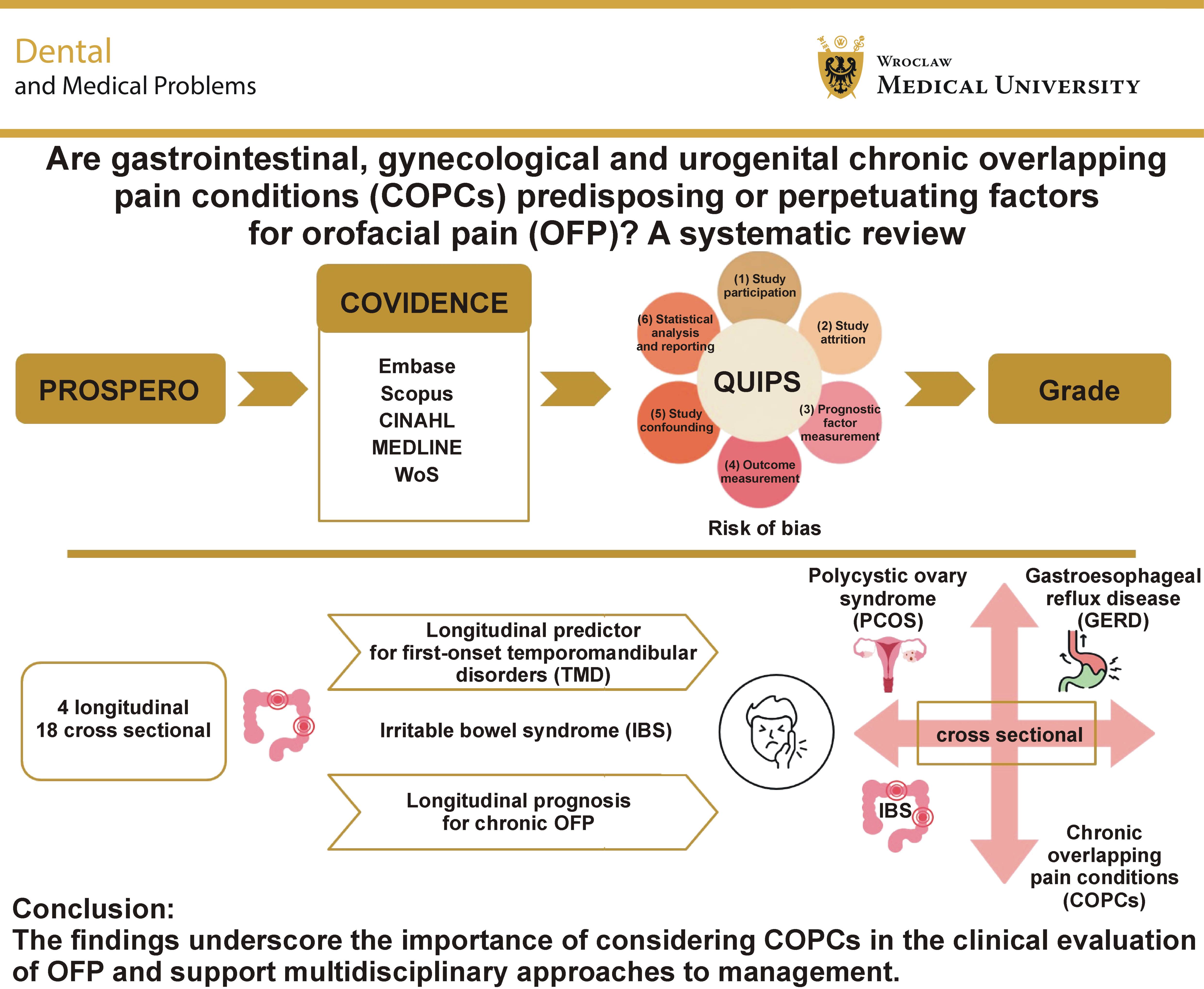
Orofacial pain (OFP) is a multidimensional clinical problem that includes conditions such as temporomandibular disorders (TMD). It is often associated with chronic overlapping pain conditions (COPCs), including gastrointestinal, gynecological and urogenital disorders. Despite previous reviews, uncertainty remains regarding temporality, the effect size and evidence certainty. This systematic review and meta-analysis, registered in PROSPERO, synthesized observational studies assessing the association between COPCs and OFP. Twenty-two studies met the inclusion criteria, of which 12 were eligible for quantitative synthesis. The risk of bias (RoB) was assessed with the Quality in Prognosis Studies (QUIPS) tool, and the certainty of evidence was evaluated using the Grading of Recommendations Assessment, Development and Evaluation (GRADE) approach. Longitudinal studies demonstrated, with moderate certainty, that irritable bowel syndrome (IBS) increases the risk of both first-onset and chronic OFP, including TMD and burning mouth syndrome. Cross-sectional evidence revealed associations of moderate magnitude between gastroesophageal reflux disease (GERD) and TMD, and large effects between polycystic ovary syndrome (PCOS) and TMD, though with lower certainty due to methodological limitations. Other conditions, such as interstitial cystitis (IC), gastritis, inflammatory bowel disease (IBD), and endometriosis, were supported by limited and low-certainty evidence. Overall, findings underscore the importance of considering COPCs in the clinical evaluation of OFP and support multidisciplinary approaches to management. Further high-quality longitudinal research is needed to establish causal relationships and inform mechanism-based treatment strategies.
Keywords: temporomandibular joint disorders, chronic pain, orofacial pain, facial pain, chronic overlapping pain conditions
Introduction
Orofacial pain (OFP) refers to discomfort in the hard and soft tissues of the head, face and neck.1 It may arise from dental, neurogenic, musculoskeletal, or psychophysiological origins, and is associated with cancer, infections, immune disorders, trauma, and stress.1, 2 Temporomandibular disorders (TMD) represent the most common chronic non-dental OFP condition. Recent data suggest that the global prevalence of TMD is currently estimated to be around 34%.3 However, studies indicate that the overall prevalence of OFP in the general population ranges from 17% to 26%, with chronic forms affecting approx. 7–11% of adults.4, 5 Evidence shows women experience OFP nearly twice as often as men, with an odds ratio (OR) of 2.6 (95% confidence interval (CI): 2.5–2.7).4 Estrogen levels influence pain modulation in the temporomandibular joint (TMJ) and the orofacial region. This hormonal effect may explain the higher prevalence of OFP in women; however, current evidence is insufficient to confirm a direct causal role of estrogen in TMD.6, 7
Orofacial pain encompasses a wide range of clinical presentations and is characterized by its complexity, often reflecting the coexistence of multiple comorbidities.8 The most common related conditions are primary myofascial pain syndrome and primary headaches. These are followed by irritable bowel syndrome (IBS) and chronic low back pain.9 In this context, the presence of comorbidities highlights the multifactorial nature of OFP and the need to explore its relationship with other chronic pain conditions. Notably, IBS also shows a significant overlap with other urogenital pain disorders, such as interstitial cystitis (IC), painful bladder syndrome, chronic prostatitis (CP), and chronic pelvic pain (CPP). These conditions are commonly categorized as chronic overlapping pain conditions (COPCs), characterized by central sensitization and functional pain syndromes,10 reflecting a complex neurobiological basis where altered nociceptive processing in the central nervous system plays a key role in symptom persistence.11
These findings emphasize the importance of distinguishing primary from secondary pain when examining OFP and identifying systemic conditions that may predispose to or perpetuate symptoms.11 Recent evidence indicates that COPCs adversely affect the prognosis of chronic pain across various chronic diseases,12 including OFP. Furthermore, a higher number of COPCs correlates with the prolonged duration and increased intensity of TMD.13 Building on this evidence, understanding how these COPCs interact with OFP may provide insight into the shared mechanisms underlying pain chronification. Conditions like IBS often co-occur with TMD and share common risk factors,14 including psychological elements, such as anxiety.15 Similarly, chronic secondary pain11 stemming from identifiable systemic pathologies, such as autoimmune or inflammatory diseases, has been linked to orofacial manifestations.11 For example, inflammatory bowel disease (IBD) has been associated with bruxism and TMD.16
In addition, sleep disturbances and parafunctional behaviors, such as sleep bruxism, frequently overlap with OFP and other COPCs, further complicating diagnosis and prognosis. Polysomnographic evidence indicates that individuals with OFP and headache complaints often exhibit reduced sleep quality and altered sleep architecture, which may exacerbate pain perception and contribute to central sensitization processes.17 Moreover, recent findings show that different general health conditions may aggravate sleep bruxism–related symptoms and pain perception in patients with TMD.18 These results reinforce the notion that impaired sleep regulation and systemic factors act synergistically in sustaining chronic pain, supporting the inclusion of sleep and behavioral assessments in the comprehensive evaluation of OFP.
Despite systematic reviews exploring the relationship between TMD and COPCs, important methodological and conceptual gaps persist. Building upon the previous context, it becomes evident that current summaries do not yet provide a clear picture of temporality or risk. Based on the preliminary search on this topic, and the reviews identified via Epistemonikos (the biggest database for systematic reviews) and PubMed, current evidence syntheses remain limited. Most reviews9, 19, 20, 21, 22 are purely descriptive, providing only qualitative summaries. Longitudinal studies are underrepresented, and key aspects investigating the association between OFP (especially TMD) and COPCs, such as temporality, the effect size and risk estimation, are often missing.
Kleykamp et al.9 and Moisset et al.20 reported comorbidity prevalence using cross-sectional designs without addressing temporality or prognostic relevance, while Warzocha et al. focused on statistical significance without reporting effect sizes from the associations or study design differences among the included studies.22 In addition, although Da-Cas et al. incorporated the Grading of Recommendations Assessment, Development and Evaluation (GRADE) approach to evaluate the certainty of the overall evidence, their review remained qualitative without meta-analyses or stratified analyses.19 Furthermore, other reviews also relied heavily on secondary analyses from the same cohort (OPPERA), potentially inflating certain findings. Moreover, diagnostic criteria for TMD and other OFP conditions have been inconsistently applied in the existing reviews.20, 23 This review addresses these gaps by including both cross-sectional and longitudinal studies that meet validated OFP diagnostic criteria, incorporating risk assessment, evaluating the certainty of evidence using GRADE, and performing quantitative meta-analyses where possible. In doing so, it provides the first quantitative and certainty-based synthesis of COPC–OFP associations, establishing both risk and temporality.
We hypothesized that pain-related gastrointestinal, gynecological and urogenital conditions may act as risk or prognostic factors for OFP through mechanisms such as central sensitization, hyperalgesia and low-grade inflammation. Therefore, our main objectives for this review are as follows:
– to compile and synthesize the evidence on the relationship between COPCs and OFP;
– to determine whether these COPCs act as risk factors for the onset of OFP or as prognostic factors for the chronification of OFP;
– to estimate, when possible, the magnitude and direction of these associations; and
– to identify gaps in the literature, and inform future research and clinical practice.
Methods
Protocol and registration
The protocol of the study was registered with the International Prospective Register of Systematic Reviews – PROSPERO (registration No. CRD42024537553). The review was conducted and reported following the Preferred Reporting Items for Systematic reviews and Meta-Analyses (PRISMA) guidelines.24
Eligibility criteria
This review examines the association between OFP and pain-related gastrointestinal, gynecological and urogenital disorders (COPCs). The inclusion and exclusion criteria were defined using the adapted Population, Predictor/Prognostic Factors, and Outcomes (PFO) framework.25
Population
The inclusion criteria comprised studies targeting adults (aged ≥18 years) diagnosed with acute, subacute or chronic OFP, TMD or intraoral pain by a clinician, based on symptoms, using standardized diagnostic tools, such as the Diagnostic Criteria for Temporomandibular Disorders (DC/TMD),26 the Research Diagnostic Criteria for Temporomandibular Disorders (RDC/TMD)27 or other recognized instruments (the International Classification of Orofacial Pain, 1st edition (ICOP-1),28 the International Classification of Headache Disorders (ICHD-1,29 ICHD-230 or ICHD-331)). All OFP subtypes were eligible. Diagnoses followed ICOP28 and included: OFP associated with TMD (myofascial pain, arthralgia, or headache attributed to TMD); orofacial neuropathic pain (classical trigeminal neuralgia); trigeminal neuropathy (postherpetic neuropathy, numb chin syndrome, burning mouth syndrome (BMS)); central and idiopathic neuropathic pain (persistent idiopathic facial pain, occlusal dysesthesia); and intraoral pain (pulpal or periodontal pain). Full definitions are detailed in the supplementary material (S1A) (all supplementary materials are available from the corresponding author upon reasonable request).
Studies including both clinical (outpatient or hospital-based) and non-clinical (community or population-based) samples were eligible, provided that diagnostic criteria were clearly defined and validated. Studies were excluded if they involved pregnant participants, due to the typical exclusion of pregnancy in TMD and OFP research because of hormonal and physiological influences on pain outcomes.
For analytical consistency, diagnoses were primarily grouped into TMD pain-related conditions, including studies using RDC/TMD, DC/TMD other validated diagnostic instruments, or structured clinical examinations consistent with these criteria. When this grouping was not possible due to differences in diagnostic scope or reporting, studies were classified into the broader OFP category. The OFP group encompassed diagnoses based on ICOP, ICHD or DC/TMD (when integrated within the ICOP definitions) or structured clinical examinations. This approach ensured methodological rigor while preserving diagnostic comparability across heterogeneous study designs.
The exclusion criteria comprised studies involving animal models, terminally ill patients, cancer-related pain, or pediatric populations. Studies lacking validated diagnostic criteria or a recognized structured clinical framework for diagnosing OFP were also excluded.
Predictors/prognostic factors of interest
The included studies should have investigated the association between OFP conditions and the COPCs affecting the gastrointestinal, gynecological and urogenital systems. These were considered regardless of whether they represented chronic primary pain (without identifiable structural pathology) or chronic secondary pain (linked to clear organic findings).
The diagnostic confirmation of these conditions relied on clinical evaluation, including surgical, radiologic, endoscopic, or histopathological findings,16 and disease markers in biopsy samples.32 Validated self-report tools were accepted, including the Rome III33 and IV34 criteria, the bowel endometriosis syndrome (BENS) score,35 the genitourinary pain index (F-GUPI/M-GUPI), the lower urinary tract dysfunction research network symptom index-29 (LURN SI-29),36 and other structured clinical assessment tools. Patients were included whether OFP preceded or followed the onset of COPCs, recognizing their bidirectional interaction. While key conditions are outlined below, the review included any pain-related gastrointestinal, gynecological or urological disorder linked to OFP.
In the gastrointestinal domain, IBS and gastroesophageal reflux disease (GERD) represent the most prevalent disorders, whereas IBD, although less frequent, carries a disproportionate clinical and healthcare burden. Irritable bowel syndrome is a chronic primary disorder involving abdominal pain and altered bowel habits, while IBD includes chronic relapsing inflammatory conditions like Crohn’s disease and ulcerative colitis.37, 38 Gastroesophageal reflux disease occurs when stomach contents reflux into the esophagus, causing symptoms or complications.39 Common symptoms are heartburn and regurgitation. Gastroesophageal reflux disease may cause extraesophageal manifestations like cough, laryngitis and dental erosion. Complications include esophagitis, strictures, Barrett’s esophagus, and adenocarcinoma.40
Primary dysmenorrhea, defined as menstrual pain in the absence of pelvic pathology, is the most prevalent gynecological complaint, particularly among women of reproductive age.41 Abnormal uterine bleeding and chronic estrogen-dependent conditions with ectopic endometrial-like tissue and pain42 are commonly identified. Bleeding can relate to structural disorders like polyps, adenomyosis, leiomyoma, malignancy, and hyperplasia, or anomalies such as coagulopathy, ovulatory dysfunction or endometrial pathology.42 Endometriosis is an inflammatory estrogen-dependent disease associated with pelvic pain and/or infertility, characterized by uterine and extrauterine tissue lesions.32
Urological pain syndromes were considered within the broader category of CPP, particularly when pain was perceived in the bladder, urethra, prostate, penis, or scrotum, and no active infection or structural cause was present.43 These chronic primary urological syndromes often present with lower urinary tract symptoms, sexual dysfunction and psychosocial impact. Examples include primary bladder pain syndrome, prostate pain syndrome, and urethral, penile and scrotal pain syndromes.
Chronic overlapping pain conditions were classified according to the framework established by the International Association for the Study of Pain (IASP) and the International Classification of Diseases 11th revision (ICD-11),44 as well as the guidelines from the European Association of Urology (EAU).43 These guidelines are conceptually based on the IASP classification of chronic pain, which differentiates between chronic primary pain syndromes (such as IBS and primary dysmenorrhea) and chronic secondary pain syndromes (such as IBD and endometriosis). Full definitions are provided in the supplementary material (S1B).
Outcomes of interest
The primary outcomes were OFP development/progression and its association with the COPCs described above. We evaluated whether these conditions were associated with OFP, and quantified the strength of these associations. The progression of OFP was operationalized according to the clinical indicators reported in the included studies, including increases in pain intensity (e.g., the numeric rating scale (NRS) or visual analog scale (VAS) scores), symptom frequency or duration, and the clinical transition between acute, subacute and chronic conditions. The associations between TMD and IBS were further examined in relation to IBS severity scores, the number of gastrointestinal symptoms, and TMD-related pain duration or intensity.
Effect sizes for the associations were determined using univariate models (e.g., Pearson’s or Spearman’s correlations, OR, the relative risk (RR)) or multivariable models (e.g., logistic regression, Cox regression, Poisson regression), providing estimates such as OR, RR or the hazard ratio (HR). When only prevalence data were reported, yet crude OR could be calculated, we did so, distinguishing these from the adjusted models for exploratory inferences.
Study designs
Due to the nature of our question (i.e., looking for an association), we targeted mainly observational studies. Retrospective and prospective cohort studies, case–control studies, cross-sectional studies, and case series were included. Controlled observational studies with healthy participants and association statistics were included. Non-controlled cohort studies with data to estimate associations were also included. We excluded randomized controlled trials (RCTs), controlled trials, case reports, reviews, systematic reviews, meta-analyses, commentaries, letters, conference papers, book chapters, protocol registrations, and abstracts without full texts, as these designs would not appropriately address our question. Relevant references in the excluded reviews were screened for inclusion. We only included original data, and excluded secondary analyses from the same study data or database as primary studies, e.g., multiple publications using the same data from the OPPERA cohort.
Review question
The review question was as follows: “Can any gastrointestinal, gynecological and urogenital COPCs be considered a risk/prognostic factor for the development and/or progression of OFP?”
Search strategy
A health sciences librarian with 20 years of experience conducted a computerized literature search as part of a research project investigating the associations between COPCs and OFP, headache and neck pain. The search strategy was designed to comprehensively capture studies across all 3 pain domains.
The search was conducted initially in 2023, and then updated again on July 29, 2025, for this specific research question. The following databases were searched: Ovid MEDLINE (1946 to July 29, 2025); CINAHL (from inception up to July 29, 2025); Embase (1974 to July 29, 2025); Scopus (1927 to October 20, 2023); and the Web of Science (WoS) (1976 to July 29, 2025). The subject headings and keywords were adapted for each database. The search strategy focused on terms (Medical Subject Headings (MeSH) and free-text) related to OFP and COPCs, as well as their associations. No time or language restrictions were imposed.
In addition, PROSPERO was searched to identify ongoing or unpublished systematic reviews on the topic. ClinicalTrials.gov was excluded, as it primarily indexes interventional trials, which were not relevant to the present research question. OpenGrey was not included, since its database has not been updated since 2020.
For this review, only studies reporting on the relationship between OFP and any of the COPCs listed above were included. During full-text screening, the reference lists of eligible articles were reviewed to identify additional studies. Backward and forward citation tracking was performed through WoS on July 17, 2025, to identify additional or unpublished studies. Duplicate records from the overlapping databases were automatically detected and removed using the Covidence tool (https://www.covidence.org) before the screening process. The full search strategies conducted in all databases initially, and when updating the search, are available in the supplementary material (S2).
Study selection
The search results were imported into EndNote and transferred to Covidence for screening. We used Covidence to track the review process, depicted in the last version (2020) of the PRISMA flowchart.24 Three reviewers (CJM, JBS, MSB) independently screened the titles and abstracts according to the predefined eligibility criteria. Full texts were reviewed for the studies meeting the inclusion criteria or where eligibility was unclear from the abstracts. For studies with multiple publications, the most recent or complete versions were included. The reviewers were blinded to each other’s decisions to reduce bias. Discrepancies were resolved by consensus, with a third reviewer (senior author SAO) making the final decisions if needed.
Data extraction
Data extraction was conducted using a customized form in the Covidence software. A standardized data extraction form was applied and refined through discussions to ensure consistency. Dropdown menus helped to standardize responses. Reviewers received training. Four reviewers (CJM, JIO, HvdM, GAB) independently extracted data, and one reviewer (CJM) compiled the consensus information into Excel tables. Discrepancies were resolved by consensus; if no agreement was reached, the lead author decided (SAO).
The risk of bias (RoB) was assessed by 2 independent reviewers (CJM, HvdM) using the Quality in Prognosis Studies (QUIPS) tool.45 This tool evaluates 6 domains: study participation; study attrition; prognostic factor measurement; outcome assessment; study confounding; and statistical analysis/reporting. In each domain, the RoB ratings were performed based on the following decision rules: (1) high RoB – when a domain showed serious methodological concerns likely to bias associations (e.g., poor participation, high attrition, inadequate measurements, confounding not controlled, or flawed analysis); (2) moderate RoB – when evidence was inconclusive to classify a domain as high or low RoB; and (3) low RoB – when most criteria were methodologically sound and bias was unlikely.45 The overall RoB judgment followed Hayden et al.46: (1) high RoB – at least one domain rated as high; (2) moderate RoB – maximum 2 domains rated as moderate, with others low; and (3) low RoB – all domains rated as low.
Strategy for statistical analysis and data synthesis
Random-effects meta-analyses were conducted using the metafor47 package for the R software, applying an inverse variance model with the restricted maximum likelihood (REML) estimation. Analyses were performed for each comorbidity pair, using log odds ratios (log (OR)) and standard errors (SE). Summary estimates, 95% CI, and heterogeneity statistics (I2 and τ2) were reported. Adjusted and unadjusted data were analyzed separately to account for confounding factors.
To ensure analytical consistency, studies were grouped by methodological design into longitudinal and cross-sectional categories, reflecting the temporal design rather than RoB. Differences in study quality, diagnostic criteria and analytical adjustments were evaluated via the leave-one-out (LOO) sensitivity analyses to assess the influence on the pooled estimates and heterogeneity.
No conversions between effect measures (e.g., OR, RR, HR) were performed; each meta-analysis included studies reporting the same measure type. When studies did not report OR, but provided raw 2×2 data, crude ORs were calculated using the MedCalc OR calculator48 for inclusion in relevant meta-analyses.
The LOO sensitivity analyses assessed how each study influenced the pooled effect and heterogeneity. For each LOO iteration, one study was removed and a new random-effects model was recalculated. Meta-analyses were considered unstable if removing a study changed the CI from excluding to including the null value (OR = 1) or reversed the effect direction. Following methodological guidance,49, 50 studies compromising stability due to high heterogeneity or low quality were excluded from the final model. Forest plots were generated using ggplot251 to display the individual and pooled estimates with effect sizes, GRADE ratings, and color-coded diagnostic groups. Analyses were performed in R, with outputs included in the manuscript and the supplementary materials.
Effect sizes for ratio measures (OR and RR) were interpreted using the guidelines by Chen et al.52 The authors related OR to Cohen’s d by comparing standardized probability differences. Their estimates showed that OR values of 1.68, 3.47, and 6.71 corresponded to small (d = 0.2), medium (d = 0.5), and large (d = 0.8) effect sizes when the baseline outcome rate was 1% in the non-exposed group.52 In this review, OR or RR values ≤1.68 were considered negligible, 1.68–3.47 small, 3.47–6.71 moderate, and ≥6.71 large. For hazard ratios, we followed Vibha et al.53: HR ≤ 1 indicated no increased risk; 1.2–1.5 moderate risk; and >1.5 high risk. For unstandardized β coefficients from linear regression models, effect sizes were interpreted relative to the outcome scale and the established thresholds of clinical importance. For pain intensity measured with NRS (0–10), coefficients predicting changes of about 1.90 points were considered minimally clinically important,54 whereas changes of ≥2 points were regarded as clinically relevant. This approach allowed a patient-centered interpretation of effect sizes. For pain duration in years, changes exceeding 1 year were substantial when the baseline duration was approx. 10 years. This approach allowed a patient-centered interpretation of effect sizes.
Certainty of evidence
The quality of prognostic evidence was assessed using the GRADE approach. Following the criteria by Huguet et al.,55 the certainty of evidence was rated as high (⨁⨁⨁⨁), moderate (⨁⨁⨁◯), low (⨁⨁◯◯), or very low (⨁◯◯◯). For each analysis, we evaluated the following: (1) the number of participants; (2) the number of cohorts; (3) study limitations; (4) result inconsistency; (5) indirectness (limited generalizability); (6) imprecision (insufficient or wide CIs); (7) publication bias risk; (8) effect magnitude; and (9) the presence of a dose–response gradient.
Outcomes of interest were grouped by study design (longitudinal vs. cross-sectional) and based on the analysis performed. The GRADE assessment was conducted for each of these groups using the approach by Huguet et al.55 Longitudinal studies provided prognostic evidence, while cross-sectional studies contributed association evidence. For each TMD–OFP/COPC pair, certainty ratings were synthesized considering all domains of GRADE – the study design, RoB, inconsistency, indirectness, and imprecision.
Results
Study selection
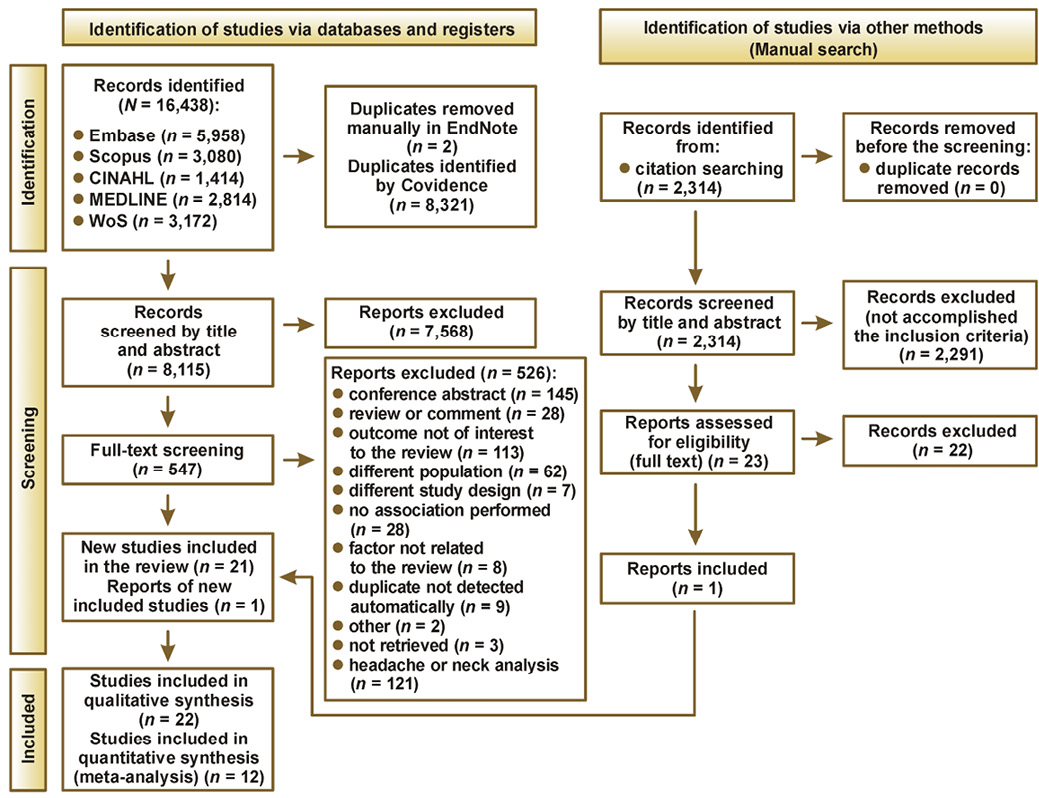
The PRISMA flowchart in Figure 1 shows the selection process. After compiling the data from the search of databases, 16,438 preliminary studies were found. After removing duplicates, 8,115 studies remained, and 547 were read fully. After reviewing all manuscripts, 121 were excluded, but still considered for other analysis related to the headache and neck pain project. Of the remaining studies, 22 met the inclusion criteria,13, 16, 56, 57, 58, 59, 60, 61, 62, 63, 64, 65, 66, 67, 68, 69, 70, 71, 72, 73, 74, 75 and 12 were included in the meta-analysis. Details regarding the reasons for exclusion are provided in the supplementary material (S3).
Study characteristics and variables
We divided the studies into 2 groups. The 1st group includes studies that enable the investigation of the temporality of conditions and factors (temporality-oriented studies).66, 68, 70, 73 The 2nd group comprises studies adopting a cross-sectional approach or not accounting for temporal dimensions (cross-sectional associative studies).13, 16, 56, 57, 58, 59, 60, 61, 62, 63, 64, 65, 67, 69, 71, 72, 74, 75 Below, we report variables that were classified under each group. Detailed results related to these variables are presented in Table 1.
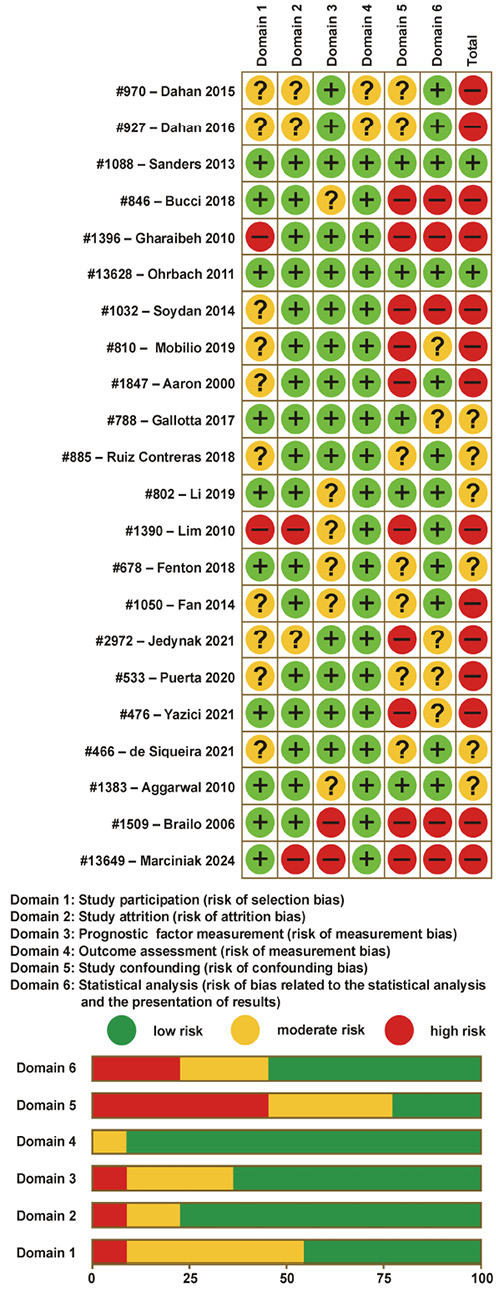
The general characteristics of the studies are summarized in Table 2. Most studies presented a high RoB, 6 studies were rated as having a moderate RoB, and only 2 could be classified as having a low RoB. For a summary of the RoB of these studies, refer to Figure 2.
Temporality-oriented studies
In the 1st group, we identified 2 types of studies: 2 prospective longitudinal studies by Lim et al.66 and Sanders et al.,70 and a nested case–control study by Ohrbach et al.68 based on Sanders’ cohort, which used a prospective analysis.68 These studies diagnosed TMD using the RDC/TMD. Ohrbach et al.68 and Sanders et al.70 diagnosed IBS using Rome III, and analyzed the risk of first-onset TMD and its chronification in individuals with IBS. Lim et al. used a self-report instrument based on RDC/TMD to analyze the risk of first-onset TMD in individuals with dysmenorrhea.66 All studies included comparison groups of participants without TMD, enabling risk estimation by comparing exposed and non-exposed individuals. In addition, the prospective population-based study conducted by Aggarwal et al. examined the onset of chronic OFP, including TMD, over a 2-year follow-up.73 The study assessed how co-occurring pain conditions, such as IBS diagnosed according to the Rome II criteria, influenced the development of OFP.73
Predictor or prognosis variables. Exposure to primary disorders
Based on the studies mentioned above,66, 68, 70, 73 we could group the variables used to analyze the effects of the predictive and prognostic relationships related to primary pain disorders. Specifically, they examined: (1) the likelihood of first-onset TMD among subjects with IBS70; (2) the likelihood of first-onset TMD among subjects with dysmenorrhea66; and (3) the likelihood of chronic OFP among subjects with IBS.68, 73
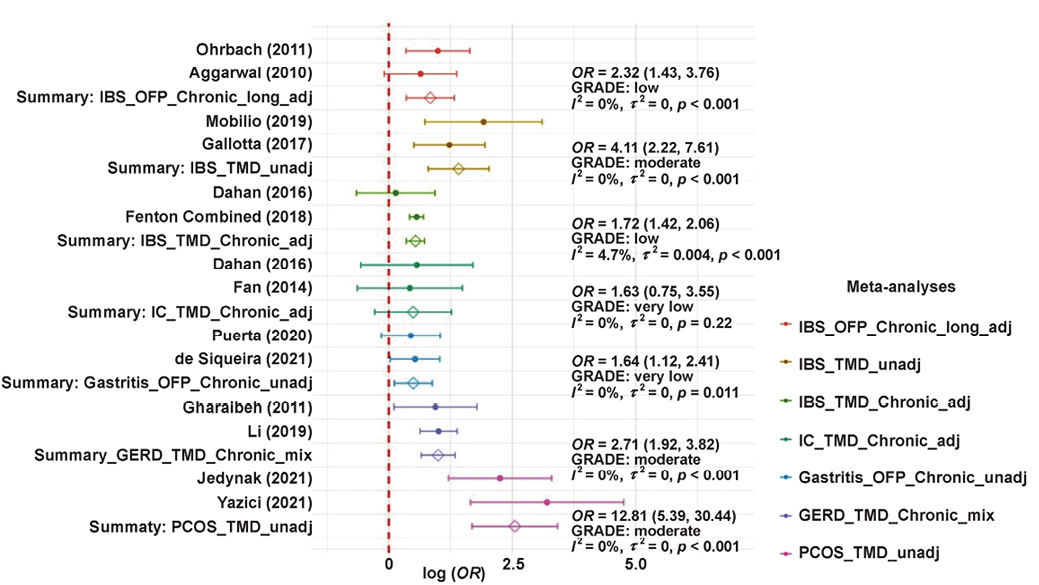
In the reviewed literature, limited longitudinal studies precluded stratified meta-analyses by diagnosis (i.e., TMD, BMS) in relation to prognostic factors (e.g., IBS, IBD, gastritis); the only association permitting meta-analytic inference was IBS in relation to chronic OFP (3). This was based on 2 large studies with comparable populations, validated diagnostic criteria for OFP and IBS, and similar adjustments for confounders, showing a consistent trend toward increased likelihood of developing TMD, BMS or other OFP diagnoses among those with prior IBS symptoms. The meta-analysis yielded a pooled OR of 2.32 (95% CI: 1.43–3.76), indicating more than a twofold increase in odds for those exposed (Figure 3).
The evidence indicates moderate certainty that IBS is associated with increased likelihood of first-onset TMD (1) and low certainty that it is associated with chronic OFP (3). However, the evidence linking dysmenorrhea to chronic OFP (2) has low certainty due to study limitations (Table 1; supplementary material S4).
Cross-sectional associative studies
This group consists mostly of most cross-sectional studies.13, 16, 56, 57, 58, 60, 62, 64, 65, 67, 69, 71, 74, 75 We included the nested case–control study by Ohrbach et al.,68 and the case–control studies by de Siqueira et al.,59 Gharaibeh et al.63 and Yazici et al.,72 as they incorporated a cross-sectional analysis of the data. Most studies diagnosed TMD using RDC/TMD,13, 16, 57, 58, 60, 62, 63, 65, 67, 68, 72 while Jedynak et al.64 and Marciniak et al.74 applied DC/TMD. Fenton et al. identified TMD cases based on 2 positive clinical examinations within 18 months, using the ICD definitions.61 Soydan et al. diagnosed TMD using a structured form, Okeson’s questionnaire and criteria.71 Puerta et al.69 and di Siqueira et al.59 focused on OFP diagnosis, including TMD, BMS, headaches, and neuropathies, based on the IASP76 and the IHS31 criteria. In contrast, Brailo et al. diagnosed OFP secondary to BMS through a clinical examination, ruling out local and systemic causes.75
From the analyzed studies, most included both men and women. However, some studies focused only on women-related issues like menstrual pain, endometriosis and PCOS.64, 66, 71, 72, 74 Fenton et al. showed results separately for men and women.61 To align with other studies that presented combined estimates, we merged the male and female data using a fixed-effects meta-analysis. A fixed-effects approach was appropriate here, as both estimates originated from the same study, with the same variables and methodology, and the only difference was sex. We applied the inverse-variance method to log ORs and their SEs to obtain the pooled estimate.
Association variables. Exposure to primary and secondary disorders
From these studies performing cross-sectional analyses, we could extract variables to analyze associative relationships between TMD and other COPCs. Specifically, they examined: (4) a bidirectional association between TMD and IBS62, 67: assesses studies in which either TMD or IBS was the primary diagnosis or an associated condition, evaluating their co-occurrence; (5) the association between IBS and chronic TMD56, 58, 61: evaluates the presence of IBS in individuals with a clinical diagnosis of chronic TMD; (6) the association between IC and chronic TMD56, 58, 60: explores the presence of IC in individuals diagnosed with chronic TMD; (7) the association between gastritis and chronic OFP57, 59, 69, 75: examines the presence of gastritis in individuals diagnosed with OFP; (8) the association between TMD and chronic IBD16: investigates the presence of TMD in individuals with a diagnosis of chronic IBD; (9) a bidirectional association between chronic TMD and chronic GERD63, 65: assesses studies in which either chronic TMD or GERD is the main or associated diagnosis, examining their mutual relationship; (10) the association between TMD and PCOS64, 71, 72: evaluates the presence of TMD in individuals diagnosed with PCOS; and (11) the association between TMD and endometriosis74: evaluates the presence of TMD in individuals diagnosed with endometriosis. Variables 1 to 4 were primarily related to primary pain disorders, whereas variables 5 to 8 were associated with secondary pain due to the underlying organic pathology.
The reviewed studies reported varied associations between TMD (or chronic TMD) and comorbidities, with effect sizes from very small to large. The estimates, RoB assessments and study characteristics are presented in Table 1, and meta-analytical forest plots in Figure 3. Notably, the strongest, most consistent associations were for functional comorbidities, the association between IBS and TMD (4) being the most prominent (OR: 4.11; 95% CI: 2.22–7.61; p < 0.001).62, 67 Regarding organic conditions, the PCOS–TMD association (10) showed a strong effect (OR: 12.81; 95% CI: 5.39–30.44; p < 0.001),64, 72 while the GERD–chronic TMD association (9) presented a small effect, approaching moderate (OR: 2.71; 95% CI: 1.92–3.82; p < 0.001).63, 65
For primary disorders, the certainty of evidence was generally low, with moderate certainty for the associations between GERD and PCOS and TMD (9 and 10). Most associations, including IBS (4) or gastritis (7), have very low to low certainty due to small samples, cross-sectional designs and a high RoB. For secondary disorders, the certainty of evidence was mostly low to very low, with moderate certainty only for GERD and PCOS (Table 1; supplementary material S4).
Dose–response variables. Exposure to primary disorders
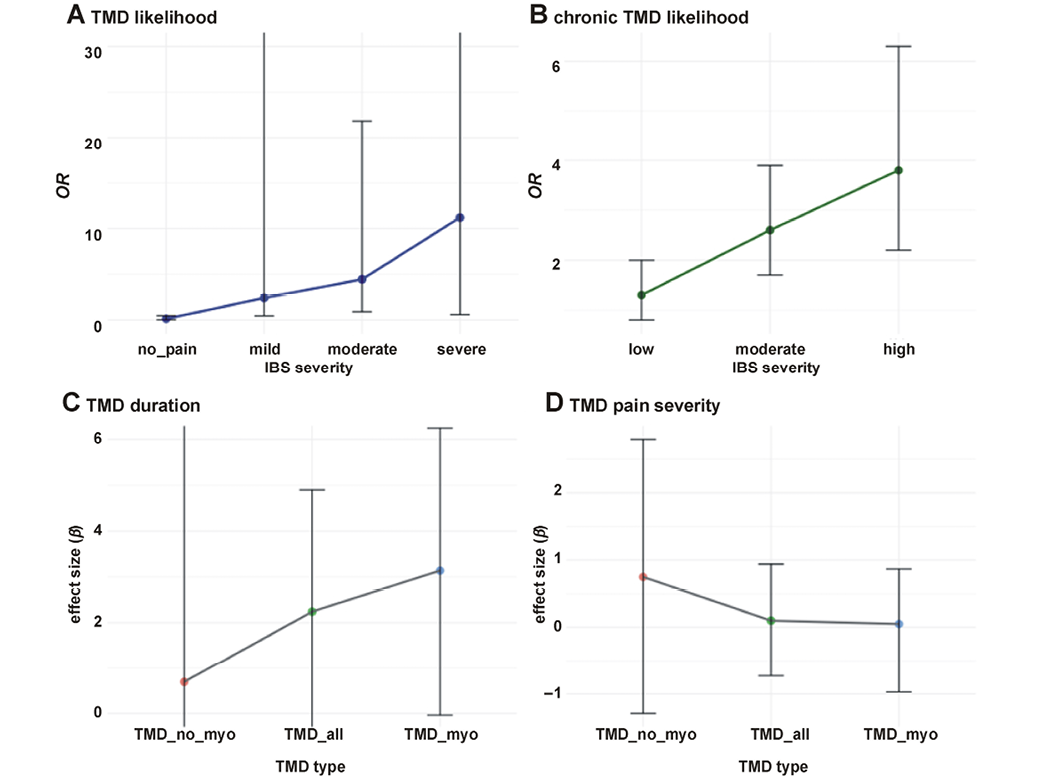
From the cross-sectional analyses we also extracted the variables used to examine the graded relationship between IBS and different dimensions of TMD, such as pain intensity, pain duration or pain location. Specifically, they examined: (12) the association between IBS severity and TMD diagnosis,67 evaluating whether increasing levels of IBS symptom severity were associated with the likelihood of having at least one type of TMD diagnosis; (13) the association between IBS severity and chronic TMD,68 assessing whether greater IBS severity predicts the presence of chronic TMD; (14) the association between IBS and TMD pain duration,13 investigating whether the presence of IBS is linked to longer duration of TMD-related facial pain, stratified by myofascial and non-myofascial diagnostic subtypes; and (15) the association between IBS and TMD pain severity,13 examining whether individuals with IBS report higher TMD pain severity as compared to those without IBS, also stratified by the TMD subtype.
In the association between IBS severity and TMD (12), the data indicated an increase in the likelihood of TMD diagnosis with higher IBS severity levels, following an exponential pattern in the odds across severity categories. For the association between IBS severity and chronic TMD (13), the odds of chronic TMD increased progressively with higher IBS severity. Individuals with IBS presented longer durations of TMD pain, particularly in the myofascial subtype (14). In relation to TMD pain severity (15), IBS was associated with slightly higher pain intensity scores, with no substantial differences between the diagnostic subtypes. These exposure variables and stratified outcomes are presented in Figure 4.
The certainty of evidence was moderate for the graded association between IBS severity and general TMD outcomes, including pain duration. For chronic TMD and TMD pain intensity, the certainty was very low due to small samples and methodological limitations (Table 1; supplementary material S4).).
Sensitivity analysis of the conducted meta-analyses
The LOO analysis indicated varying levels of stability across the meta-analyses. In the assessment of the likelihood of chronic OFP among individuals with IBS, a low level of instability was noted, attributed to the CI reported by Aggarwal et al.,73 which narrowly encompassed zero. However, upon aggregating the 2 studies,68, 73 no heterogeneity was observed, and the effects remained consistent. Consequently, we retained this study in the meta-analysis.
In the gastritis and chronic OFP model, including 2 studies57, 75 introduced moderate heterogeneity, though it did not change the overall direction of the effect. While the CIs became more consistent across iterations, the heterogeneity justified excluding these studies to enhance model homogeneity and robustness.
In the IBS and chronic TMD model, high heterogeneity (I2 > 70%), and significant variation in OR and CI indicated the instability of estimates. To improve consistency to I2 = 4.7%, we excluded the study with the highest RoB and the lack of confounder adjustment.56
A similar approach was applied to the IC and TMD model. Excluding the study by Aaron et al.56 improved stability by reducing heterogeneity to I2 = 0.0% and minimizing the methodological variation influence.
For the model assessing the association between TMD and PCOS, we directly excluded the study by Soydan et al., as it used a clinically accepted diagnostic criterion lacking formal validation.71
In the meta-analysis of the bidirectional association between chronic TMD and chronic GERD, the 2 available studies differed in methodological rigor, as one adjusted for confounders and had a larger sample,65 while the other did not.63 Despite this, both showed nearly identical effect sizes, and the pooled analysis revealed no heterogeneity. Therefore, we retained the meta-analysis and reported it as a mixed model.
Following the LOO analysis, all models exhibited stability and homogeneity, with I2 values ranging from 0.0% to 4.7%, indicating minimal variation in the pooled estimates across iterations. The comprehensive results of the LOO analysis are presented in Table 3.
Discussion
Summary of findings
This review evaluated evidence regarding the associations between COPCs and OFP, focusing on TMD, identifying the strength, direction and temporal characteristics of these associations.
We found consistent evidence of positive associations between COPCs and OFP, particularly for IBS, GERD and PCOS. Although longitudinal studies were limited, prognostic meta-analysis indicated with low certainty that IBS increases the likelihood of chronic OFP (OR: 2.32; 95% CI: 1.43–3.76), including TMD and BMS. Irritable bowel syndrome showed a temporal relationship with first-onset TMD and chronic OFP.
Other meta-analyses based on cross-sectional data reflected associative rather than predictive relationships. The pooled estimates indicated moderate to large effects: IBS was associated with chronic TMD (OR: 1.72; 95% CI: 1.42–2.06), GERD with chronic TMD (OR: 2.71; 95% CI: 1.92–3.82), and PCOS showed the strongest association with TMD (OR: 12.81; 95% CI: 5.39–30.44). However, these latter associations (GERD and PCOS) should be interpreted with caution, as they are based on unadjusted analyses that did not account for potential confounding variables. Overall, since most studies did not adequately control for confounders, the certainty of these associations was downgraded to low or very low. This included the remaining conditions (IC, gastritis, IBD, and endometriosis), where the evidence was further limited by small sample sizes and a high RoB.
Literature gaps persist. While studies used validated criteria like DC/TMD or ICOP-1, many were excluded due to inadequate diagnostic standards. Most included studies were cross-sectional, lacked confounder adjustment and showed heterogeneity. Limited longitudinal data restricted causal inferences.
These limitations highlight the need for prospective studies with standardized diagnostics, confounder control, and the exploration of shared pathways like central sensitization and inflammation.
Comparison with previous literature
This review corroborates previous narrative reviews examining the relationship between OFP and COPCs. Da-Cas et al. suggested that painful TMD may be nociplastic, given its overlapping characteristics with other COPCs, such as fatigue, sleep disturbances and central sensitization, leading to pain-related disability.19 Our review extends these observations by addressing a distinct research question on the putative risk factors involved in TMD onset and by quantitatively exploring the magnitude of associations between OFP/TMD and systemic conditions.
Similarly, Kleykamp et al. reviewed comorbidities in TMD patients and reported a higher prevalence of several COPCs, including IBS, myofascial pain and fibromyalgia, as compared to non-TMD individuals,; however, their analysis was limited to cross-sectional evidence.9 In contrast, our meta-analysis integrates both cross-sectional and prospective longitudinal data, providing a more comprehensive framework to explore not only co-occurrence, but also potential etiopathogenic links between these conditions.
Recent studies have highlighted immune activation and the role of cytokines in IBS, particularly regarding pain mechanisms.77, 78 Irritable bowel syndrome is associated with altered signaling between immune cells and sensory neurons in the gut, driving chronic pain.78 These inflammatory mediators and nociplastic pathways extend beyond the gut; cytokines can enhance neuronal excitability and promote central sensitization in the trigeminal system, contributing to hyperalgesia and orofacial muscle pain in TMD. Immunological evidence from IBS supports the hypothesis that generalized muscle pain sensitivity in TMD is mediated by nociplastic mechanisms, consistent with reviews on myofascial trigger points and nociplastic pain, where the induced trigger points produce persistent hyperalgesia and central sensitization without evident tissue damage.78
Saczuk et al. reviewed the relationship between IBS and TMD, highlighting mechanisms like autonomic dysfunction and systemic inflammation.23 Our findings complement their work by confirming the association and providing effect sizes, supporting IBS as a contributor to TMD. Basic research shows that estradiol and stress can induce visceral and cutaneous hypersensitivity with central sensitization, predisposing individuals to OFP, and explaining the comorbidity between IBS and TMD.79 Moisset et al. focused specifically on patients diagnosed with BMS, demonstrating its co-occurrence with TMD, fibromyalgia and IBS, and positioning BMS within the COPC spectrum.20 Our review expands on this perspective by including BMS within the broader category of OFP, considering it another phenotype of nociplastic pain that shares common underlying mechanisms with TMD and other COPCs.
The effect sizes observed between TMD and GERD in our synthesis are noteworthy. These magnitudes exceed those seen for primary pain disorders, suggesting that GERD, through the mechanisms of tissue damage, inflammation and altered pH, may accelerate the peripheral and central sensitization underlying chronic OFP. This aligns with Manfredini’s multidimensional framework,80 which describes how GERD, via sleep disruption and parafunctional activities, creates conditions for chronic OFP. Li et al. reported that GERD was more prevalent in BMS patients, suggesting that reflux-induced pH alterations and sensory disturbances in the orofacial region may predispose to chronic OFP.81
The association between TMD and PCOS was robust. Evidence shows TMD is more prevalent and severe in women with PCOS, due to systemic inflammation and altered sex hormone-mediated pathways.72 Supporting this, Sun et al. observed that adolescents with untreated PCOS and anterior disc displacement had greater condylar resorption and reduced bone regeneration after disc repositioning surgery.82
This progression appears in our meta-analytical forest plot, with primary conditions shown in the upper section and secondary conditions in the lower section, displaying increasing effect sizes from top to bottom. These observations suggest that diverse COPCs, through the overlapping inflammatory, hormonal and neural pathways, converge on shared nociplastic mechanisms that sustain chronic OFP.
Mechanistic considerations
The findings align with the literature framing TMD as nociplastic pain conditions, where pain stems from altered central nociceptive processing rather than peripheral pathology. Svensson characterized TMD as a model of nociplastic pain, emphasizing central sensitization, impaired pain modulation and pain facilitation prevalent in other COPCs.83
Expanding on this idea, various biological fields seem to interact in the pathophysiology of TMD and associated COPCs. Hormonal, inflammatory/immune, and neuroplastic processes come together to maintain chronic pain and clarify the connections between gastrointestinal, gynecological and orofacial pain conditions.
This framework aligns with central sensitivity syndromes – the overlapping conditions including TMD, IBS, fibromyalgia, chronic headache, and pelvic pain syndromes that share persistent pain despite differing anatomical locations. The model proposes these disorders are unified by central sensitization, with subjects showing lowered sensory thresholds and heightened responsiveness to nociceptive input.84 Subjects present with common psychosocial features like depression, anxiety, fatigue, and cognitive difficulties, which interact with biological processes to sustain pain.84 Thus, the comorbidity between TMD and other COPCs reflects not isolated phenomena, but shared central mechanisms and vulnerability profiles within a biopsychosocial context.
Supporting this mechanistic framework, neuroimaging research provides insight into central sensitization. Lam et al. examined the cortical footprint of COPCs by comparing females with TMD-related chronic pain and fibromyalgia with and pain-free controls, using structural magnetic resonance imaging (MRI).85 They found cortical and subcortical alterations in the regions involved in pain modulation, affective-emotional processing, and sensorimotor integration. These changes correlated with pain distribution, pain catastrophizing and affective distress, supporting that COPCs share neuroplastic brain alterations affecting sensory-discriminative and affective-cognitive pain dimensions.84, 85
Psychological and behavioral mechanisms further modulate these physiological processes. Recent evidence indicates that sleep bruxism not only correlates with OFP and headache, but also with systemic health conditions and with COPCs, such as gastrointestinal, endocrine and sleep disorders.18 Bruxism has been consistently linked to psychological stress and anxiety,86, 87 supporting its role as a behavioral manifestation of stress reactivity and autonomic dysregulation. These mechanisms are particularly relevant in women, in whom hormonal fluctuations heighten stress responsiveness and central sensitization, amplifying both muscular activity and pain perception.88 The interplay of psychological stress, hormonal modulation and neuromuscular activation reinforces the need for integrated biopsychosocial approaches that combine behavioral, stress-reduction and somatic interventions.
Together, these biological and psychological mechanisms converge on common nociplastic pathways that integrate peripheral, hormonal and central sensitization processes. Table 4 summarizes the predominant mechanistic pathways linking key COPCs (IBS, GERD, PCOS, and endometriosis) with TMD. This overview integrates peripheral and central processes across hormonal, inflammatory and neuroplastic domains, illustrating how distinct conditions converge on shared nociplastic mechanisms.
Clinical implications
From a translational perspective, these mechanistic insights have direct clinical relevance. Evidence from Justribó-Manion et al. shows that subjects with higher baseline comorbidity severity and pain catastrophizing improved more when physical therapy was combined with behavioral interventions.89 Moreover, prognostic modeling demonstrated that the number of coexisting COPCs is a robust clinical marker of OFP-related disability severity, with the predictive value comparable to psychosocial variables like pain catastrophizing or kinesiophobia.89 This indicates that assessing comorbidity provides valuable information for identifying individuals at risk and guides appropriate patient management.
Moreover, the effect sizes for the associations between TMD and both GERD and PCOS underscore the need for thorough differential diagnosis and multidisciplinary evaluation. Both GERD and PCOS can contribute to or mimic OFP symptoms, requiring coordinated care between dentistry, gastroenterology and gynecology. Treating the underlying condition, such as hormonal regulation in PCOS or reflux management in GERD, may reduce peripheral and central sensitization, improving OFP outcomes. Sun et al. found that treating PCOS in adolescents with TMJ anterior disc displacement improved condylar remodeling and reduced degenerative changes.82 Similarly, systematic evidence indicates that proton pump inhibitors not only alleviate GERD symptoms, but may also improve TMD outcomes.90
These findings highlight the importance of considering COPCs in TMD assessment. Integrating multimodal management, including physical therapy, the medical treatment of systemic comorbidities, and psychosocial interventions, within interdisciplinary teams may improve symptom control and outcomes. Tailoring interventions to patient profiles, accounting for psychosocial distress and comorbidity severity, may be crucial for optimizing management and prognosis.
Clinically, integrating COPC assessment into TMD evaluation and management means:
– assessing COPCs: IBS, GERD, PCOS may contribute to OFP;
– tailoring interventions to patient profiles: consider psychosocial factors and comorbidity severity for prognosis;
– coordinating care between dentistry, gastroenterology, gynecology, and psychology/physical therapy; and
– targeting mechanisms: address peripheral (inflammation, hormonal dysregulation, reflux) and central (sensitization, maladaptive pain modulation) drivers.
Strengths and limitations
This review provides a quantitative synthesis of the COPC–OFP relationship, combining likelihood and prognostic perspectives, and applying GRADE to assess evidence certainty. Strengths include integrating longitudinal and cross-sectional designs to explore temporality and associations, rigorous selection criteria with the exclusion of duplicated cohorts, and sensitivity analyses to enhance robustness. Limitations must be acknowledged. The number of high-quality prospective studies was limited, restricting causal inference. Methodological heterogeneity in diagnostic criteria, outcome measurements and comparator characteristics reduced comparability, and may have introduced bias. Many studies lacked adequate control for confounders, which could inflate associations. Some analyses relied on few studies, limiting statistical power and precision. The available evidence is observational, so residual confounding cannot be fully excluded despite adjusted models and sensitivity analyses.
Our synthesis offers preliminary insights, but the associations should be interpreted with caution. These limitations were considered throughout the methodology and are reflected in the evidence certainty rating. Clinicians should view the findings as exploratory, while future research should prioritize prospective cohorts with standardized diagnostics, robust confounder adjustment and stratified analyses. Such improvements are needed to move beyond descriptive associations toward reliable evidence that can support precision management of TMD in patients with COPCs.
Conclusions
While this review provides the first quantitative synthesis of COPC–OFP associations, causal relationships remain to be confirmed through well-designed longitudinal studies. We found that IBS consistently increased the likelihood of both first-onset and chronic TMD, while GERD and PCOS also showed large effects, suggesting shared inflammatory, hormonal and pH-related pathways. These findings highlight the need for prospective, standardized studies and support a shift toward mechanism-based approaches in the prevention and treatment of chronic OFP.
Trial registration
The protocol of the study was registered with the International Prospective Register of Systematic Reviews – PROSPERO (registration No. CRD42024537553).
Ethics approval and consent to participate
Not applicable.
Data availability
The datasets supporting the findings of the current study are available from the corresponding author on reasonable request.
Consent for publication
Not applicable.
Use of AI and AI-assisted technologies
The authors used Paperpal for Word add-in (version 3.1; Cactus Communications Services, Mumbai, India) solely to improve the English language and the readability of the manuscript. Paperpal did not contribute to the scientific content, study design, data collection, data analysis, interpretation of the findings, or conclusions.