Abstract
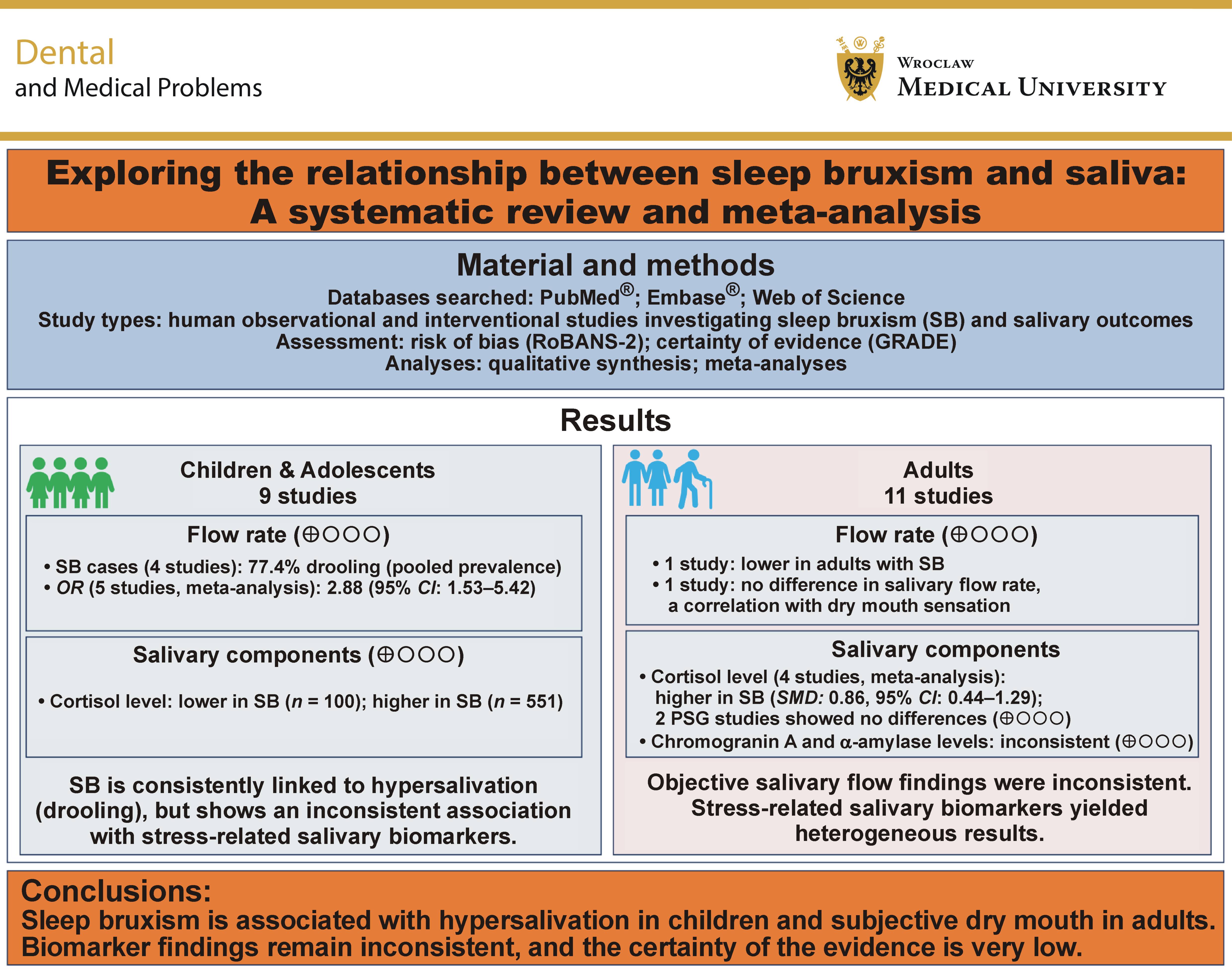
Sleep bruxism (SB) is defined as rhythmic masticatory muscle activity occurring during sleep. Evidence suggests that SB may be associated with alterations in salivary function; however, findings remain inconsistent across age groups. This study aimed to evaluate the relationship between SB and salivary flow and composition. A systematic search of PubMed®, Embase® and Web of Science was conducted to identify human studies reporting SB and saliva-related parameters. Twenty studies involving 4,543 participants were included. Risk of bias was assessed using the Risk of Bias Assessment tool for Non-randomized Studies (RoBANS-2), and certainty of evidence was appraised using the Grading of Recommendations, Assessment, Development and Evaluation (GRADE) framework. In pediatric populations, SB was frequently associated with sleep drooling, with a pooled prevalence of 77.4% and a significant association between SB and drooling (odds ratio (OR): 2.88, 95% confidence interval (CI): 1.53–5.42; I2 = 91%). In adults, 2 studies reported inconsistent findings regarding objectively measured salivary flow, and 1 study found an association with subjective xerostomia. A meta-analysis of 4 studies indicated elevated salivary cortisol in participants with SB (standardized mean difference (SMD): 0.86, 95% CI: 0.44–1.29), although studies using polysomnography for SB diagnosis found no significant differences. Results for chromogranin A (CgA) and α-amylase were heterogeneous. Overall, the available evidence, which was of very low certainty, suggests that SB is associated with hypersalivation in pediatric populations and with subjective oral dryness in adults, whereas associations with salivary biomarkers remain inconclusive. Future studies using standardized, age-specific protocols that combine objective SB diagnostic methods with controlled saliva sampling are warranted to clarify the underlying mechanisms and inform clinical management.
Keywords: saliva, sleep bruxism, age groups, salivary proteins and peptides, sialorrhea
Introduction
Sleep bruxism (SB), with a global prevalence of approx. 21%, is a common masticatory muscle activity occurring during sleep that is characterized as rhythmic (phasic) or non-rhythmic (tonic).1, 2 Its etiology is multifactorial, involving genetic, neurochemical and sleep arousal-related mechanisms, as well as lifestyle factors such as smoking, caffeine consumption and alcohol intake.3, 4, 5, 6 The condition has also been associated with headaches, oxidative stress and other comorbidities, including obstructive sleep apnea (OSA) and gastroesophageal reflux disease.7, 8, 9, 10, 11 Sleep bruxism is currently regarded as a sleep-related behavior rather than a movement or sleep disorder.1 Although SB is generally not harmful, it may increase the risk of dental wear, orofacial pain, temporomandibular disorders, and prosthodontic complications, such as crown fracture and implant overload.12, 13, 14
Beyond its mechanical consequences, emerging evidence suggests that SB may influence salivary secretion, which is essential for maintaining oral health and supporting the long-term success of dental restorations.15, 16, 17 Saliva protects oral tissues through lubrication, antimicrobial activity and buffering, and is particularly important in oral rehabilitation settings.18 Several studies have suggested that SB may increase salivary flow as a protective response to airway obstruction in OSA or acid exposure in gastroesophageal reflux disease.15, 19, 20 These findings have further supported the redefinition of SB as a behavior rather than a disorder.1, 21 Conversely, other studies have reported reduced salivary secretion in adults with SB, potentially due to chronic stress and autonomic dysregulation.22, 23 The inconsistent evidence may result from methodological differences, age-related variations and the influence of comorbid conditions such as OSA and xerostomia.24, 25, 26 Additionally, stress-related salivary biomarkers, including cortisol, chromogranin A (CgA) and α-amylase have also been investigated in individuals with SB, but their clinical relevance remains unclear.27, 28, 29, 30, 31, 32 Importantly, objective salivary hypofunction (measured flow reduction) should be distinguished from subjective xerostomia (perceived dryness despite normal flow) as both have been reported in SB studies.33, 34, 35, 36
Although previous studies have examined some aspects of the relationship between SB and salivary function, no systematic review has comprehensively synthesized the available evidence across children, adolescents and adults. Addressing this gap is clinically relevant due to the high prevalence of SB worldwide2 and its reported associations with other comorbidities.7, 8, 9, 10, 11 Clarifying whether SB is consistently linked to altered salivary secretion or stress-related biomarkers may also inform clinical practice in pediatric dentistry, orthodontics, prosthodontic rehabilitation, and sleep medicine.
Therefore, this systematic review and meta-analysis aimed to: 1) evaluate the association between SB and salivary flow across different age groups; 2) assess the relationship between SB and salivary components; and 3) explore potential mechanisms linking SB with altered salivary secretion.
Material and methods
Study design
This systematic review was conducted in accordance with the Preferred Reporting Items for Systematic Reviews and Meta-Analyses (PRISMA) 2020 guidelines.37 The review protocol was registered with the International Prospective Register of Systematic Reviews (PROSPERO) (registration No. CRD42024582843). The protocol and reporting approach were designed to ensure methodological transparency and reproducibility.
Search strategy
A systematic search was conducted in PubMed®, Embase® and Web of Science to identify relevant studies published up to August 15, 2024. The search strategy combined keywords related to SB and salivary secretion. In PubMed® and Embase®, the index terms (Medical Subject Headings (MeSH) and Emtree terms, respectively) were further added to the search strategy. The search was limited to articles published in English (Supplementary Material A (available on request from the corresponding author)). Reference lists of eligible studies were manually screened to identify additional relevant publications.
Article screening and eligibility criteria
Study selection was performed according to the Population, Exposure, Outcome (PEO) framework (Table 1).38
Article screening was conducted in 2 stages: title and abstract screening, followed by full-text review, by 2 reviewers (DL and HC). Discrepancies were resolved by consensus or consultation with a senior reviewer (FW).
The inclusion criteria were: 1) human studies; 2) studies assessing both SB and saliva-related outcomes using questionnaires, clinical inspection or objective measurements; 3) observational studies, controlled clinical trials and randomized controlled clinical trials; 4) intervention studies providing sufficient baseline data to analyze the association between SB and salivary secretion.
Case reports, case series, reviews, editorials, commentaries, conference abstracts, non-English publications, animal studies, and studies without full-text availability were excluded.
Quality assessment
The quality of the included studies was assessed using a revised version of the Risk of Bias Assessment tool for Non-randomized Studies (RoBANS-2) (Supplementary Material B).39 The RoBANS-2 evaluates 8 domains: comparability of the target group; target group selection; confounders; measurement of intervention/exposure; blinding of assessors; outcome assessment; incomplete outcome data; and selective outcome reporting. The risk of bias for each domain was rated as high, low or unclear.
Certainty of evidence was appraised using the Grading of Recommendations, Assessment, Development and Evaluation (GRADE) framework,40 considering risk of bias, inconsistency, indirectness, imprecision, and publication bias. Because this review did not formulate clinical recommendations, only the certainty of evidence component of the GRADE framework was applied.
Publication bias was evaluated using funnel plots and Egger’s regression test when at least 10 studies were available for an outcome.
Two reviewers (DL and HC) independently performed the quality assessment of the included studies. Disagreements were resolved through discussion, or, when necessary, consultation with a senior reviewer (FW).
Data extraction
Data was independently extracted by 2 reviewers using a standardized form and cross-checked for accuracy. The extracted data included authors, publication year, study location, study design, sample characteristics (sample size, age and sex distribution); SB assessment methods (e.g., self-report, clinical exam, polysomnography (PSG)); saliva assessment methods (e.g., salivary flow measurement, biomarker analysis); and the main findings regarding the association between SB and salivary secretion. When subgroups were present, their age, sex and sample characteristics was presented separately. Data extraction was performed independently by 2 reviewers (DL and HC).
Meta-analysis
The quantitative synthesis evaluating the relationship between SB and salivary secretion was performed in the R language (v. 4.4.1; R Foundation for Statistical Computing, Vienna, Austria) with the R packages “meta”41 and “metafor”(v. 4.6-0).42 The number of individuals with drooling or hyposalivation in the SB and control groups was used to calculate odds ratios (ORs) and 95% confidence intervals (CIs). For continuous outcomes, such as salivary cortisol concentrations, mean differences (MDs) and the standardized mean differences (SMDs) were calculated. A random effects model was used, and heterogeneity was assessed using the I2 index. Thresholds for the interpretation of the I2 statistic followed the Cochrane Handbook43: 0–40% – heterogeneity might not be important; 30–60% – may represent moderate heterogeneity; 50–90% – may represent substantial heterogeneity; 75–100% – considerable heterogeneity.
Results
Study selection
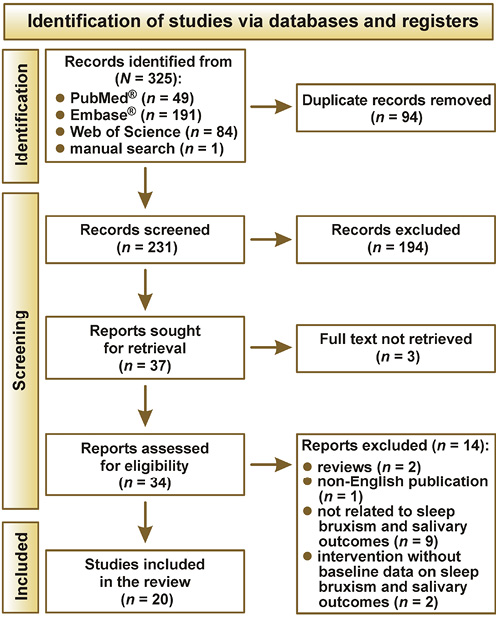
The initial search yielded a total of 325 articles, including 49 from PubMed®, 191 from Embase® and 84 from Web of Science. After removing duplicates, 230 articles remained. An additional article was identified through manual searching, resulting in 231 articles for the title and abstract screening. Following this, 37 articles were selected for full-text review. Of these, 20 studies met the inclusion criteria and were included in the qualitative synthesis; 2 outcomes (sleep drooling in children and salivary cortisol) were eligible for meta-analysis. The study selection process is presented in Figure 1.
Study characteristics
Twenty studies involving a total of 4,543 participants were included. The studies showed a broad geographical distribution, with 1 from North America (USA), 7 from South America (Brazil), 2 from the Middle East (Iran), 4 from Europe (2 from Greece, 2 from Serbia), and 6 from Asia (5 from Japan and 1 from Romania). Nine studies44, 45, 46, 47, 48, 49, 50, 51, 52 focused on children and adolescents, 10 studies28, 29, 30, 34, 35, 36, 53, 54, 55, 56 on adults, and one,31 specifically, on older adults. The characteristics of the included studies are summarized in Table 2.
All included studies were observational, comprising 17 cross-sectional studies,28, 29, 30, 31, 34, 35, 44, 45, 46, 47, 48, 49, 50, 51, 53, 54, 56 2 cohort studies36, 55 and 1 case–control study.52 In addition, 5 studies30, 36, 52, 55, 56 compared individuals with and without SB.
The included studies used various instrumental and non-instrumental methods to assess SB. Specifically, 5 studies relied solely on self-report questionnaires,34, 35, 48, 50, 52 10 studies used clinical examinations with or without additional questionnaires,30, 31, 36, 44, 45, 46, 47, 49, 53, 55 and 5 employed instrumental approaches such as PSG, electromyography (EMG) or BiteStrip devices.28, 29, 51, 54, 56 Among them, 2 studies54, 56 used PSG for SB assessment.
In terms of salivary assessment, studies utilized subjective and objective approaches. Seven studies adopted questionnaires35, 44, 48, 49, 50, 51, 52 to collect information on drooling or dry mouth. For objective assessment, salivary flow rate was analyzed using the spitting method or the Schirmer test in 2 studies.35, 55 Stress-related salivary biomarkers were also evaluated, including salivary cortisol in 8 studies,28, 30, 34, 36, 46, 47, 54, 56 CgA in 3 studies29, 53, 54 and alpha-amylase in 2 studies.28, 31
Risk of bias of the included studies
The results of the risk-of-bias assessment are presented in Table 3. Most studies showed a low risk of bias for target group comparability (19 studies28, 29, 30, 31, 35, 36, 44, 45, 46, 47, 48, 49, 50, 51, 52, 53, 54, 55, 56) and adequate adjustment for confounders (18 studies28, 29, 30, 31, 34, 36, 44, 45, 46, 47, 48, 49, 51, 52, 53, 54, 55, 56). Seven studies29, 35, 36, 45, 50, 52, 54 had a high risk of bias due to selection of the target group from specific settings, such as clinics, military personnel or dental setting, which limited the generalizability of the findings.
Regarding outcome assessment, 6 studies assessing SB34, 36, 44, 48, 50, 52 and 7 studies evaluating salivary outcomes44, 45, 48, 49, 50, 51, 52 used only questionnaires and were therefore considered to have a high risk of bias. Blinding of the assessors was not clearly reported in any of the 20 studies and was therefore rated as unclear. One study45 had a high risk of bias due to incomplete outcome data, whereas none of the included studies showed evidence of selective outcome reporting.
Sleep bruxism and salivary flow rate
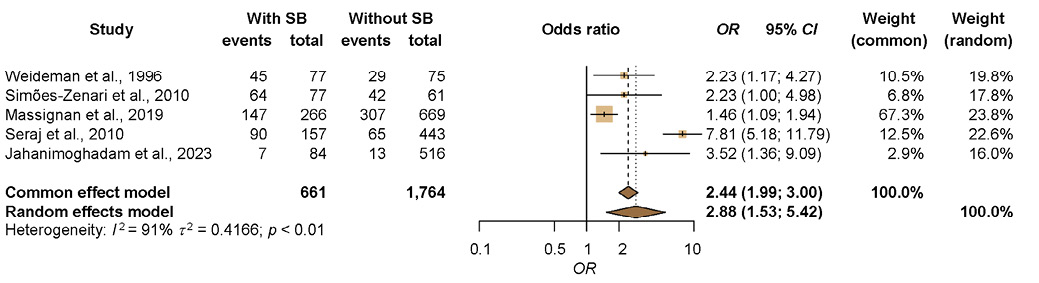
Seven studies44, 45, 48, 49, 50, 51, 52 investigated the relationship between SB and salivary flow rate, mainly sleep drooling, in children and adolescents. All these studies employed questionnaires or interviews to assess both SB and salivary secretion outcomes, and 4 studies44, 45, 49, 55 additionally incorporated clinical inspection of tooth wear or other symptoms as part of the SB assessment. Four of the 7 studies48, 50, 51, 52 reported the prevalence of drooling in children with SB, ranging from 9% to 82%. When pooled, the overall prevalence of drooling among children with SB was 77.4%, which is approximately twice that observed in children without SB (37.5%). In addition, 5 studies44, 48, 50, 51, 52 reported a positive association between SB and drooling, whereas the remaining 2 studies45, 49 found no significant correlation. A meta-analysis of 5 studies48, 49, 50, 51, 52 with available data showed that children with SB are significantly more likely to experience drooling during sleep (OR = 2.88, 95% CI: 1.53–5.42) (Figure 2). Notably, the heterogeneity was substantial (I2 = 91%). However, all 5 contributing studies assessed both SB and drooling using self- or parent-report questionnaires, none used instrumental or standardized clinical measures, and age strata were inconsistently reported. Accordingly, formal subgroup or sensitivity analyses were not feasible.
Two studies35, 55 investigated the relationship between SB and salivary flow in adults. One study55 reported a slightly lower, although not statistically significant, stimulated salivary flow rate, measured using the spitting method, in adults with SB compared with controls. The other study,35 conducted among adult male soldiers, found that SB was not associated with unstimulated morning hyposalivation, as measured by the Schirmer test, but was significantly associated with the subjective sensation of dry mouth.
Sleep bruxism and salivary components
Eleven studies investigated the association between SB and salivary components, mainly stress-related salivary biomarkers, specifically cortisol (n = 8),28, 30, 34, 36, 46, 47, 54, 56 CgA (n = 3)29, 53, 54 and alpha-amylase (n = 2).28, 31 Nine studies reported alterations in salivary biomarkers in individuals with SB compared with controls. Specifically, 6 studies28, 30, 34, 36, 46, 53 found significant positive associations between SB and stress-related biomarkers, 3 studies29, 31, 47 reported negative correlations, and 2 studies54, 56 displayed no correlation.
Among the studies investigating cortisol, 2 were conducted in children. One study involving 100 children (mean age = 7.2 years) reported significantly lower salivary cortisol levels in those with SB,47 whereas the other, conducted in a larger pediatric cohort of 551 children aged 7–8 years, found higher cortisol levels in individuals with SB.46
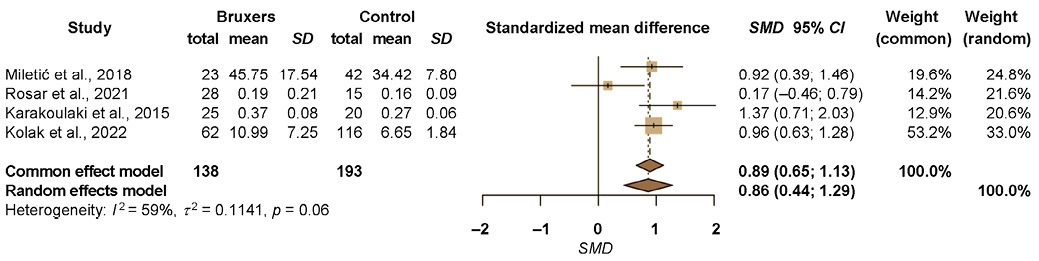
Four studies28, 30, 34, 56 investigating the association between SB and salivary cortisol levels in adults were eligible for meta-analysis. The pooled analysis showed higher salivary cortisol levels in individuals with SB than in controls (SMD: 0.86, 95% CI: 0.44–1.29) (Figure 3). Moderate-to-substantial heterogeneity was observed (I2 = 59%). The included studies used different methods for SB assessment (Table 2), and saliva sampling protocols and analytical assays also varied. Because a subgroup analysis based on the diagnostic method would have resulted in the PSG subgroup containing only a single study, a formal subgroup meta-analysis was not performed. Notably, the 2 studies54, 56 using PSG to evaluate SB in adults consistently reported that salivary cortisol levels were not associated with SB severity and did not differ significantly between bruxers and non-bruxers.
For CgA and α-amylase, all relevant studies were conducted in adults and reported mixed findings. Two studies53, 54 found a positive association between SB and CgA, whereas another found a negative correlation.29 Regarding α-amylase, 1 study31 among older adults (>65 years) reported a negative association with SB, whereas another study28 among participants aged 25–55 years found no significant differences between bruxers and non-bruxers.
Certainty of evidence (GRADE)
The certainty of evidence for the main outcomes was assessed using the GRADE framework.40 As all included studies were observational, the initial certainty was rated as low and was further downgraded because of risk of bias, inconsistency and imprecision. Publication bias could not be assessed because neither meta-analysis included 10 or more studies. Overall, the certainty of evidence was rated as very low for all outcomes, including salivary flow rate (drooling) in children and adolescents, salivary flow rate in adults, and stress-related salivary biomarkers (cortisol, CgA and α-amylase) (Table 4).
Publication bias
As both meta-analyses in this review included fewer than 10 studies, formal assessment of publication bias was not performed, in accordance with the recommendation of the Cochrane Handbook and the GRADE handbook.40, 43
Discussion
This systematic review synthesized current evidence on the association between SB and salivary secretion, focusing on both quantitative (salivary flow rate) and qualitative (salivary biomarkers) aspects. The findings suggest a possible age-dependent pattern: SB in children and adolescents was more frequently associated with increased salivary flow, particularly sleep drooling, whereas in adults, SB was associated primarily with subjective sensations of dry mouth, possible reductions in salivary flow, and alterations in stress-related biomarkers.
Given that most of the included studies were observational, predominantly cross-sectional, and relied primarily on self- or parent-reported SB and subjective salivary outcomes, the reported associations should not be interpreted as evidence of causation. Therefore, the findings support only correlational inferences, and any causal relationships should be confirmed in longitudinal or experimental studies.
Sleep bruxism and salivary flow rate
The pooled data from this review demonstrated that children and adolescents with SB had significantly higher odds of drooling during sleep than non-bruxers (77.4% vs. 37.5%, OR = 2.88), although heterogeneity across studies was considerable and the certainty of evidence was very low. This finding is consistent with previous studies that have associated SB with immature orofacial motor regulation and frequent sleep arousals.35, 57 In addition, SB in children is frequently concomitant with disordered breathing conditions such as OSA, snoring, mouth breathing, and adenotonsillar hypertrophy, which may independently contribute to drooling by disrupting normal swallowing patterns and promoting saliva pooling.19, 25, 26 In pediatric patients undergoing orthodontic or removable appliance therapy, excessive salivation may also lead to practical complications, including appliance instability, mucosal irritation and reduced treatment compliance.58
Nevertheless, these findings must be interpreted with caution. Most of the included studies relied on self-reported SB and drooling, limiting diagnostic validity and increasing the risk of recall and reporting bias. According to the latest international consensus (2025), the former grading system for SB diagnosis has been removed; instead, self-report, clinical examination and instrumental methods are each recognized as having specific strengths and limitations, with no single approach considered definitive.1 Without objective confirmation using PSG or other instrumental measures, causal relationships cannot be established. The observed association may instead reflect shared developmental or neurophysiological processes during childhood and adolescence. Clinically, the coexistence of SB and hypersalivation may represent a potential marker of sleep-disordered breathing and may warrant further assessment, particularly in pediatric dentistry and orthodontic practice.
In adults, the association between SB and salivary flow remains uncertain. One study observed a slightly reduced, although not statistically significant, stimulated salivary flow rate in patients with SB,55 whereas another study, using the Schirmer test to assess unstimulated morning salivary secretion, found no objective difference but reported a significant association between SB and the subjective sensation of dry mouth.35 These discrepancies highlight the importance of distinguishing between objectively measured hyposalivation (an absolute reduction in salivary flow) and xerostomia (the subjective perception of oral dryness despite normal salivary flow). The latter may be particularly influenced by psychological stress and comorbid conditions such as OSA and snoring, both of which are commonly associated with SB.22, 23, 59
Despite these inconsistencies, one proposed explanation is that reduced salivation, whether objectively measured or subjectively perceived, might act as a physiological trigger for SB, with rhythmic masticatory muscle activity serving as a compensatory mechanism to stimulate saliva production.15, 55 However, this hypothesis remains speculative and has not been confirmed in high-quality studies. Additionally, because adults with OSA and snoring frequently report dry mouth,24 the noted association between SB and OSA60, 61 may partly reflect shared underlying mechanisms related to salivary dysfunction. Correlations between SB, masticatory muscle pain and sleep-disordered breathing further support this integrated perspective.11, 59 These interrelated factors suggest that dental treatment planning, particularly for prosthodontic and implant-supported rehabilitation, should adopt an integrated approach that considers SB, salivary alterations and coexisting sleep-related conditions.
Sleep bruxism and salivary components
Several studies included in this review explored the relationship between SB and stress-related salivary biomarkers, including cortisol, CgA and α-amylase. Overall, the findings were inconsistent, with results varying across age groups, biomarker types and diagnostic methods. High heterogeneity, small sample sizes and the reliance on self-reported SB in most studies further reduced the certainty of the available evidence.
In children, the evidence regarding salivary cortisol is inconsistent. One earlier study involving 100 children (mean age: 7.2 years) reported significantly lower salivary cortisol levels in those with SB,47 whereas a more recent study46 involving a larger pediatric cohort (551 children aged 7–8 years) found elevated cortisol levels in individuals with SB. Both studies used comparable SB assessment methods (questionnaires combined with clinical examination) and cortisol assays (enzyme-linked immunosorbent assay (ELISA) or electrochemiluminescence), indicating that methodological differences are unlikely to account for the discrepant findings. Instead, they may reflect variations in participants’ stress exposure, the timing of saliva collection or developmental differences in stress-regulation systems.
In adults, the meta-analysis of 4 studies showed higher salivary cortisol levels among participants with SB (SMD: 0.86, 95% CI: 0.44–1.29), although the association did not reach statistical significance. This finding is consistent with previous studies linking SB with salivary alterations, chronic stress, hypothalamic–pituitary–adrenal axis dysregulation, and bruxism-related symptoms.20, 28, 30, 34, 46, 62 Chronic stress may contribute to autonomic overactivation, salivary gland fatigue and reduced resting salivary flow,22, 23, 57 which has been hypothesized to trigger SB as a compensatory mechanism aimed at restoring oral moisture through rhythmic masticatory muscle activity.
Findings regarding CgA and α-amylase were more variable. Two studies found a positive association between CgA and SB,53, 54 whereas one reported a negative association.29 Regarding α-amylase, 1 study involving adults aged 25–55 years found no significant differences between bruxers and non-bruxers,28 whereas another study involving older adults (>65 years) reported a negative correlation between SB and α-amylase levels.31 These discrepancies may reflect the distinct physiological roles of these biomarkers, with cortisol representing chronic hypothalamic–pituitary–adrenal axis activation, and CgA and α-amylase reflecting more acute sympathetic nervous system activity. They may also be influenced by age-related differences in stress responsiveness and salivary gland function.27, 63, 64, 65
However, it is important to note that 2 studies54, 56 using PSG for SB diagnosis reported no significant differences in salivary cortisol levels between patients with SB and controls. This discrepancy suggests that the reported association between SB and stress-related biomarkers may be influenced by the reliance on subjective stress measures and non-instrumental SB assessment methods. Consequently, associations observed in studies based primarily on self-reported SB should be interpreted with caution, as they may reflect shared psychological backgrounds rather than a direct physiological relationship.
Overall, although some evidence suggests an association between SB and stress-related salivary biomarkers, these findings should be interpreted with caution due to inconsistent results, possible age-related differences and substantial methodological limitations, particularly the reliance on non-instrumental methods for SB assessment.
Limitations
A major limitation of the included studies is the limited validity of the SB assessment methods. Only a minority of studies utilized instrumental diagnostic methods (PSG or EMG), while the majority relied on self-reported symptoms, parental reports or clinical signs such as tooth wear. However, self-report-based SB assessment is known to correlate only weakly with PSG-confirmed SB,46 and tooth wear is not a specific indicator of SB66, 67 because it can result from multiple factors, including dietary habits, gastroesophageal reflux and parafunctional behaviors.
Because fewer than 10 studies were included in each meta-analysis, publication bias could not be formally assessed. Therefore, the presence of unpublished or selectively reported studies cannot be ruled out. Furthermore, this review was limited to English-language publications, introducing the risk of language bias and potentially excluding relevant studies published in other languages. In addition, blinding of outcome assessors was unclear in all included studies. This limitation is particularly important for subjective salivary outcomes (e.g., self-reported xerostomia or drooling), where knowledge of SB status may have influenced outcome reporting and contributed to detection bias.
Notably, 6 of the pediatric studies originated from Brazil, suggesting that cultural, diagnostic or healthcare-system factors may have influenced both SB ascertainment and the reporting of salivary outcomes. This concentration of evidence may have inflated the pooled prevalence estimate of drooling in children with SB and limits the generalizability of findings to other populations.
This review also acknowledges that comorbidities such as OSA, gastroesophageal reflux disease and anxiety disorders may play an integral role in the observed associations between SB and salivary function.10, 11, 59, 64, 68, 69 Similarly, lifestyle factors such as smoking have been shown to alter salivary homeostasis and may therefore confound the relationship between SB and salivary parameters.6, 70 These conditions share overlapping neurophysiological and behavioral mechanisms with SB and may independently or synergistically influence salivary function. However, most included studies did not systematically assess or adjust for these potential confounders. Consequently, the reported associations may reflect the combined effects of coexisting conditions rather than a direct relationship between SB and salivary alterations.
Clinical implications
The systematic review highlights several clinical implications for the management of SB across different age groups. However, practical recommendations remain constrained by the heterogeneity of the available evidence and its overall very low certainty. Accordingly, clinical decision-making should remain individualized and conservative. Moreover, salivary biomarkers (cortisol, CgA, α-amylase) currently lack validated diagnostic utility and should not be used as standalone diagnostic markers for SB. When assessed, they should be regarded only as adjunctive, hypothesis-generating indicators. Emerging management frameworks for SB should therefore be interpreted in this context.6, 71, 72, 73 The main clinical implications are as follows:
• In pediatric populations, the observed association between SB and hypersalivation may complicate appliance therapy, potentially leading to reduced stability, mucosal irritation, or patient discomfort. Clinicians should therefore consider appropriate appliance modifications and reinforce oral hygiene measures to minimize saliva-related complications;
• In adults, SB may be associated with reduced salivary flow and/or subjective symptoms of dry mouth. The presence of subjective xerostomia, even in the absence of objectively measured salivary hypofunction, may reflect underlying stress-related autonomic dysregulation and should prompt evaluation for comorbid conditions such as OSA. These considerations are particularly relevant in prosthodontics and implant dentistry, where SB-related salivary alterations may affect prosthesis longevity and oral tissue health.
Future research directions
Future research should further elucidate the mechanisms underlying the relationship between SB and salivary function. In particular:
• The findings of this review suggest that the association between SB and salivary alterations differs between pediatric and adult populations, indicating the presence of age-specific mechanisms. Longitudinal studies with standardized assessment protocols are needed to confirm these findings and clarify the causal pathways linking stress, SB and salivary alterations;
• Future studies should adopt the most recent international consensus definitions of SB (2025)1 and, whenever feasible, incorporate instrumental confirmation of SB episodes (e.g., PSG or EMG) together with objective and time-controlled saliva sampling protocols;
• The influence of comorbidities such as OSA, gastroesophageal reflux disease and psychological stress should be systematically controlled for or examined using stratified analyses in future studies;
• Interventional studies targeting salivary function or stress reduction may help determine whether modifying these factors can reduce SB severity or mitigate its oral health consequences;
• Future research should also investigate SB in populations with salivary disorders, such as xerostomia, Sjögren’s syndrome and diabetes, as improved recognition and management of SB may contribute to better oral health outcomes and quality of life.
Conclusions
This systematic review suggests a potentially complex association between SB and salivary alterations. In children, SB appears to be more consistently associated with hypersalivation, whereas in adults, the findings are less consistent, with some evidence supporting an association with subjective dry mouth and elevated salivary cortisol levels, suggesting a possible stress-related mechanism. However, inconsistencies across studies, potentially due to differences in age groups, biomarker selection and the predominant reliance on self-reported SB assessment methods preclude firm conclusions. Future studies using objective SB diagnostic methods and standardized saliva collection protocols are needed to clarify these associations and to better inform clinical practice.
Ethics approval and consent to participate
Not applicable.
Data availability
The datasets generated and/or analyzed during the current study are available from the corresponding author on reasonable request.
Consent for publication
Not applicable.
Use of AI and AI-assisted technologies
During the preparation of this work, the authors used ChatGPT (OpenAI, San Francisco, USA) to improve the wording and check the grammar. Subsequently, the authors reviewed and edited the work as needed and take full responsibility for the content of the publication.