Dental and Medical Problems

Dent Med Probl
Impact Factor (IF 2024) – 3.9
Journal Citation Indicator (JCI 2024) - 1.36
Scopus CiteScore (2024) – 5.0
Index Copernicus Value (ICV 2023) – 181.00
MNiSW – 70 pts
ISSN 1644-387X (print)
ISSN 2300-9020 (online)
Periodicity – bimonthly


Download original text (EN)

Dental and Medical Problems

2026, vol. 63, nr 1, January-February, p. 9–13

doi: 10.17219/dmp/215831

Publication type: comment

Language: English

License: Creative Commons Attribution 3.0 Unported (CC BY 3.0)

Download citation:

  • BIBTEX (JabRef, Mendeley)
  • RIS (Papers, Reference Manager, RefWorks, Zotero)

Cite as:


Lobbezoo F, Wetselaar P, Koutris M. The Postgraduate Orofacial Pain and Dysfunction Program at the Academic Centre for Dentistry Amsterdam: Celebrating two decades of graduates. Dent Med Probl. 2026;63(1):9–13. doi:10.17219/dmp/215831

The Postgraduate Orofacial Pain and Dysfunction Program at the Academic Centre for Dentistry Amsterdam: Celebrating two decades of graduates

Frank Lobbezoo1,2,A,B,C,D,E,F, Peter Wetselaar1,3,A,B,E,F, Michail Koutris1,A,B,E,F

1 Department of Orofacial Pain and Dysfunction, Academic Centre for Dentistry Amsterdam (ACTA), University of Amsterdam and the Vrije Universiteit Amsterdam, the Netherlands

2 Department of Orofacial Pain and Jaw Function, Faculty of Odontology, Malmö University, Sweden

3 Department of Restorative and Reconstructive Oral Health Care, Academic Centre for Dentistry Amsterdam (ACTA), University of Amsterdam and the Vrije Universiteit Amsterdam, the Netherlands

Graphical abstract


Graphical abstracts

Abstract

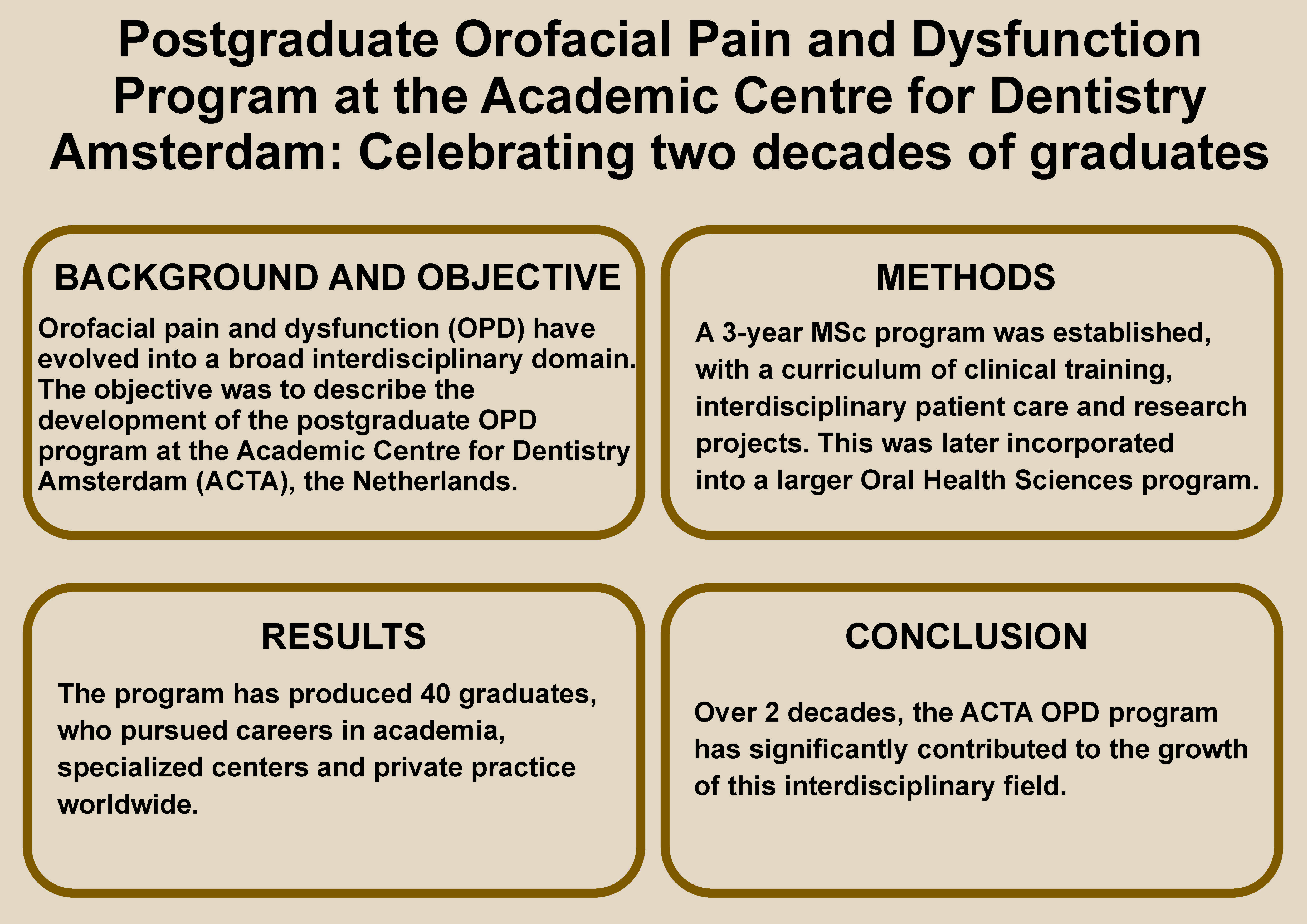
This paper outlines the development of a distinctive, full-time, 3-year postgraduate Master of Science (MSc) program in Orofacial Pain and Dysfunction (OPD), which integrates advanced clinical training, interdisciplinary care and research publication.

Keywords: orofacial pain, bruxism, tooth wear, obstructive sleep apnea, dental education

Evolution of a dental discipline

Over the past decades, the dental discipline of orofacial pain and dys­function (OPD) has evolved globally from a rather narrow, mainly dental domain with a major focus on temporomandibular disorders (TMDs) to a much broader, more medical domain that encompasses not only TMDs, but also other (non-dentoalveolar) types of orofacial pain (including neuropathic pain and headaches), oral movement disorders (including one of their most common and sometimes debilitating consequences, i.e., tooth wear in association with bruxism) and dental sleep disorders (including obstructive sleep apnea (OSA), gastroesophageal reflux (GER) and oral moistening disorders). Due to the multifactorial nature of the numerous conditions that are part of the OPD discipline, some of them partly overlapping with other dental disciplines (e.g., endodontology, oral and maxillofacial surgery) and many of them also being part of several medical disciplines (e.g., neurology, otolaryngology, anesthesio­logy, rheumatology), OPD requires dentists with specialized knowledge and skills to assess and manage the patients affected by OPD conditions in interdisciplinary settings. In 2020, the National Commission on Recognition of Dental Specialties recognized orofacial pain as the 12th dental specialty in the USA.1 Notably, also elsewhere in the world, there is an increasing focus on more and better OPD training. This global evolution of the OPD discipline has paved the way for new educational programs.

A new postgraduate OPD program

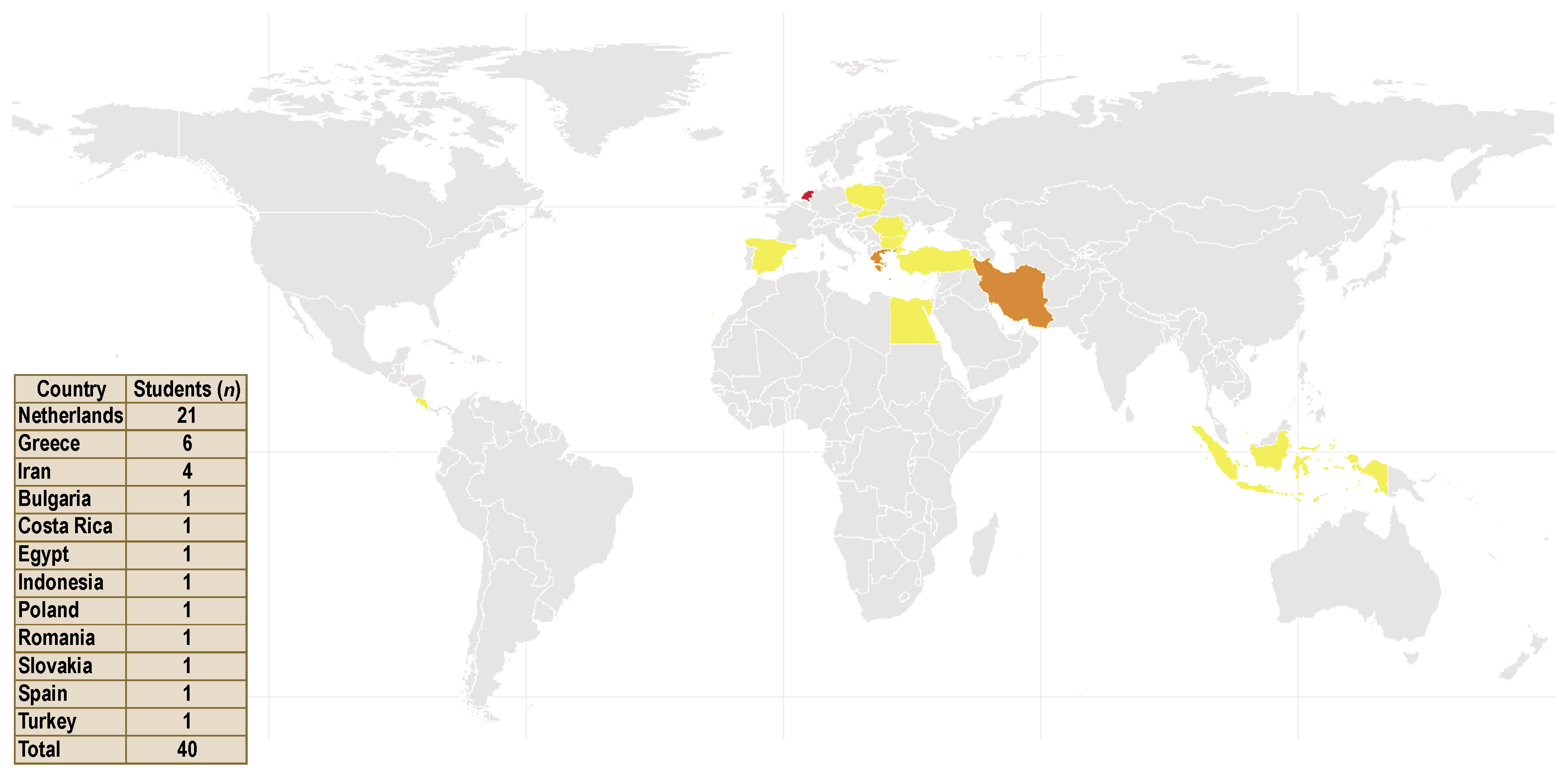
In anticipation of this global evolution, a 3-year post­graduate OPD program was developed at the Academic Centre for Dentistry Amsterdam (ACTA), the Netherlands. In September 2003, the first student was admitted to the program. From the start, the program was officially recognized by the University of Amsterdam as a post­graduate Master of Science (MSc) program. Information on the background and design of this new program was published previously.2 The program had a director (Prof. Frank Lobbezoo) and a co-director (Dr. Jacques van der Zaag), and attracted students from many different countries – most of them from the Netherlands, but also significant numbers from Greece, other European countries, and beyond (Figure 1). The program’s graduates, the first one finalizing in June 2006, pursued different careers. Some stayed at the Department of Orofacial Pain and Dysfunction of ACTA to obtain their PhD degree and/or to become a teacher/clinician, while others started a career as an orofacial pain specialist at another academic institution, in a center for special dental care or in a private practice, either in the Netherlands or outside. Yet others returned to their home country for the next phase in their careers.

Oral Health Sciences program

Around the time of the start of the OPD program in 2003, ACTA had several other postgraduate programs to offer. Some of them were well-established, like the ones for Periodontology and Endodontology; others, including the OPD program, were more in their infancies, like the ones for Pediatric Dentistry and Implantology/Prostho­dontics. All programs had their own design, manage­ment and, in some cases, accreditation. It was ACTA’s ambition to create a single postgraduate program, with several graduation profiles (i.e., OPD, Periodontology, Endodontology, Pediatric Dentistry, and Implantology/Prosthodontics). The overarching postgraduate program was named Oral Health Sciences (OHS): A 3-year full-time program, taught in English, with 60 European Credits (ECs) per year – hence 180 ECs in total. The post­graduate OHS program started in September 2015. The OPD profile continued with a structure that was comparable to the early days, but now embedded in the larger OHS structure with its additional modules and activities. From the start of the newly structured program, the profile director was Dr. Peter Wetselaar, with Prof. Frank Lobbezoo as the co-director. In 2022, the role of profile director was taken over by Dr. Michail Koutris.

Uniqueness of the program

The OPD profile of the postgraduate OHS program,3 or the OPD-OHS program in short, is unique for several reasons. It is one of the few full-time programs worldwide that train dentists in all aspects of OPD (supervisors: Dr. Michail Koutris, Prof. Frank Lobbezoo, Dr. Marisol Reyes-Sevilla, and Prof. Corine M. Visscher), including dental sleep disorders (supervisors: Prof. Ghizlane Aarab and Dr. Marisol Reyes-Sevilla) and tooth wear (supervisors: Dr. Ruud H. Kuijs, Dr. Chryssa Papagianni and Dr. Peter Wetselaar). For the latter condition, a specialized clinic was founded at the Department of Orofacial Pain and Dysfunction that focuses on the assessment, management and – when indicated – restorative treat­ment of the worn dentition, using non- or minimally invasive techniques whenever possible. Also the patients referred with a diagnosis of OSA are treated in a specialized departmental clinic, where, besides counseling, mandibular advancement appliances are offered. And obviously, a large clinic for OPD is part of the department’s clinical realm. In that clinic, an interdisciplinary team is active, including orofacial pain specialists (in training), oro­facial physical therapists, and health psychologists. In such a rich clinical environment, the postgraduate students are immersed in the complex and interconnected problems of the patients living with OPD conditions, which contributes enormously to the students’ development as orofacial pain specialists. Of important notice is the fact that in all parts of the clinic, clinicians work according to the newest insights and guidelines, including those for oro­facial pain and TMDs,4, 5, 6, 7, 8, 9, 10 bruxism,11, 12, 13, 14, 15 tooth wear,16, 17, 18 and OSA.19, 20

Apart from the clinical and educational components of the OPD-OHS program, the postgraduate students are required to perform a research project as part of their training. The project is preferably of such a level that the publication of the outcomes in an international peer-reviewed journal is possible. Indeed, most students manage to have their work published, while all students produce a postgraduate master’s thesis that includes a detailed description of their research. In Table 1, some examples of the published works of the postgraduate students of the OPD profile are provided. From the listed co-authors of these publications, the team of supervisors of the various projects can be gathered.

Finally, at the end of the program, the students are examined by an external examiner and an (independent) internal examiner. During a full examination day, the students present selected patient cases to the examiners to show their competence in clinical decision-making in interdisciplinary work. In addition, the students present their portfolio, which includes not only their research report/international publication, but also the output of all the teaching components. Based on their performance, students can fail, pass, or pass with distinction, based on rubrics that guide the examiners with their grading. The international examiners are invited based on their expertise, international reputation and profile. They are always affiliated with reputable academic dental institutions from all over Europe. Table 2 provides an overview of the external examiners who were invited between 2006 and 2025.

Conclusion

The international English-language postgraduate Oral Health Sciences (OHS) program, profile Orofacial Pain and Dysfunction (OPD), offers full-time, 3-year training for dentists specializing in an evolving dental/medical discipline that includes conditions like orofacial pain, TMDs, oral movement disorders, tooth wear, and dental sleep disorders. Since its start in 2003, 40 OPD specialists have graduated from the program. Most of them have continued (and continue) to work in the field of OPD and contribute, in various capacities, to the further growth and development of this highly interdisciplinary discipline. We look back on 2 decades of a successful program that continues to evolve toward a bright future.
Tables


Table 1. Examples of peer-reviewed publications based on the research performed by the postgraduate students (bold names) of the Orofacial Pain and Dysfunction (OPD) program*

No.

Publication

1.

Kalaykova S, Naeije M, Huddleston Slater JJ, Lobbezoo F. Is condylar position a predictor for functional signs of TMJ hypermobility? J Oral Rehabil. 2006;33(5):349–355. doi:10.1111/j.1365-2842.2005.01572.x

2.

Koutris M, Lobbezoo F, Naeije M, Wang K, Svensson P, Arendt-Nielsen L, Farina D. Effects of intense chewing exercises on the masticatory sensory-motor system. J Dent Res. 2009;88(7):658–662. doi:10.1177/0022034509338573

3.

Wetselaar P, Lobbezoo F, Koutris M, Visscher CM, Naeije M. Reliability of an occlusal and nonocclusal tooth wear grading system: Clinical use versus dental cast assessment. Int J Prosthodont. 2009;22(4):388–390. PMID:19639077.

4.

Papagianni CE, Van der Meulen MJ, Naeije M, Lobbezoo F. Oral health-related quality of life in patients with tooth wear. J Oral Rehabil. 2013;40(3):185–190. doi:10.1111/joor.12025

5.

Osiewicz MA, Manfredini D, Loster BW, Van Selms MK, Lobbezoo F. Comparison of the outcomes of dynamic/static tests and palpation tests in TMD-pain patients. J Oral Rehabil. 2018;45(3):185–190. doi:10.1111/joor.12600

6.

Van Der Lugt CM, Rollman A, Naeije M, Lobbezoo F, Visscher CM. Social support in chronic pain: Development and preliminary psychometric assessment of a new instrument. J Oral Rehabil. 2012;39(4):270–276. doi:10.1111/j.1365-2842.2011.02269.x

7.

Nikolopoulou M, Naeije M, Aarab G, Hamburger HL, Visscher CM, Lobbezoo F. The effect of raising the bite without mandibular protrusion on obstructive sleep apnoea. J Oral Rehabil. 2011;38(9):643–647. doi:10.1111/j.1365-2842.2011.02221.x

8.

Te Veldhuis AH, Lobbezoo F, Te Veldhuis EC, Naeije M, Van Selms MK. Synovial chondromatosis of the temporomandibular joint. A systematic review of the literature on its characteristics [in Dutch]. Ned Tijdschr Tandheelkd. 2011;118(9):421–426. doi:10.5177/ntvt.2011.09.10267

9.

Kalaykova SI, Klitsie AT, Visscher CM, Naeije M, Lobbezoo F. A retrospective study on possible predictive factors for long-term temporomandibular joint degeneration and impaired mobility in juvenile arthritis patients. J Oral Facial Pain Headache. 2017;31(2):165–171. doi:10.11607/ofph.1656

10.

Marpaung CM, Kalaykova SI, Lobbezoo F, Naeije M. Validity of functional diagnostic examination for temporomandibular joint disc displacement with reduction. J Oral Rehabil. 2014;41(4):243–249. doi:10.1111/joor.12130

11.

Valiente López M, Van Selms MK, Van der Zaag J, Hamburger HL, Lobbezoo F. Do sleep hygiene measures and progressive muscle relaxation influence sleep bruxism? Report of a randomised controlled trial. J Oral Rehabil. 2015;42(4):259–265. doi:10.1111/joor.12252

12.

Warnsinck CJ, Koutris M, Shemesh H, Lobbezoo F. Persistent dento-alveolar pain disorder (PDAP) [in Dutch]. Ned Tijdschr Tandheelkd. 2015;122(2):95–100. doi:10.5177/ntvt.2015.02.14189

13.

Attallah MM, Visscher CM, Van Selms MK, Lobbezoo F. Is there an association between temporomandibular disorders and playing a musical instrument? A review of literature. J Oral Rehabil. 2014;41(7):532–541. doi:10.1111/joor.12166

14.

Lövgren A, Parvaneh H, Lobbezoo F, Häggman-Henrikson B, Wänman A, Visscher CM. Diagnostic accuracy of three screening questions (3Q/TMD) in relation to the DC/TMD in a specialized orofacial pain clinic. Acta Odontol Scand. 2018;76(6):380–386. doi:10.1080/00016357.2018.1439528

15.

Visscher CM, Van Wesemael-Suijkerbuijk EA, Lobbezoo F. Is the experience of pain in patients with temporomandibular disorder associated with the presence of comorbidity? Eur J Oral Sci. 2016;124(5):459–464. doi:10.1111/eos.12295

16.

Vervoorn-Vis GM, Wetselaar P, Koutris M, Visscher CM, Evälahti M, Ahlberg J, Lobbezoo F. Assessment of the progression of tooth wear on dental casts. J Oral Rehabil. 2015;42(8):600–604. doi:10.1111/joor.12292

17.

Nikolopoulou M, Byraki A, Ahlberg J, Heymans MW, Hamburger HL, De Lange J, Lobbezoo F, Aarab G. Oral appliance therapy versus nasal continuous positive airway pressure in obstructive sleep apnoea syndrome: A randomised, placebo-controlled trial on self-reported symptoms of common sleep disorders and sleep-related problems. J Oral Rehabil. 2017;44(6):452–460. doi:10.1111/joor.12505

18.

Chin Jen Sem JP, Van der Leeden M, Visscher CM, Britsemmer K, Turk SA, Dekker J, Van Schaardenburg D, Lobbezoo F. Prevalence, course, and associated factors of pain in the temporomandibular joint in early rheumatoid arthritis: Results of a longitudinal cohort study. J Oral Facial Pain Headache. 2017;31(3):233–239. doi:10.11607/ofph.1606

19.

Thymi M, Visscher CM, Yoshida-Kohno E, Crielaard W, Wismeijer D, Lobbezoo F. Associations between sleep bruxism and (peri-) implant complications: A prospective cohort study. BDJ Open. 2017;3:17003. doi:10.1038/bdjopen.2017.3

20.

Reyes-Sevilla M, Kuijs RH, Werner A, Kleverlaan CJ, Lobbezoo F. Comparison of wear between occlusal splint materials and resin composite materials. J Oral Rehabil. 2018;45(7):539–544. doi:10.1111/joor.12636

21.

Kapagiannidou D, Koutris M, Wetselaar P, Visscher CM, Van der Zaag J, Lobbezoo F. Association between polysomnographic parameters of sleep bruxism and attrition-type tooth wear. J Oral Rehabil. 2021;48(6):687–691. doi:10.1111/joor.13149

22.

Delwel S, Maier AB, Parvaneh D, Meijers J, Scherder EJ, Lobbezoo F. Chewing efficiency, global cognitive functioning, and dentition: A cross-sectional observational study in older people with mild cognitive impairment or mild to moderate dementia. Front Aging Neurosci. 2020;12:225. doi:10.3389/fnagi.2020.00225

23.

Wetselaar P, Lobbezoo F, De Jong P, Choudry U, Van Rooijen J, Langerak R. A methodology for evaluating tooth wear monitoring using timed automata modelling. J Oral Rehabil. 2020;47(3):353–360. doi:10.1111/joor.12908

24.

Bousché G, Koutris M, Su N, Verhoeff MC, Lobbezoo F. Predictors of patients' satisfaction after temporomandibular disorder treatment in a referral clinic. J Oral Rehabil. 2024;51(2):266–277. doi:10.1111/joor.13600

25.

Van de Rijt LJ, Weijenberg RA, Feast AR, Vickerstaff V, Lobbezoo F, Sampson EL. Oral health and orofacial pain in people with dementia admitted to acute hospital wards: Observational cohort study. BMC Geriatr. 2018;18(1):121. doi:10.1186/s12877-018-0810-7

26.

Verhoeff MC, Lobbezoo F, Wetselaar P, Aarab G, Koutris M. Parkinson's disease, temporomandibular disorders and bruxism: A pilot study. J Oral Rehabil. 2018;45(11):854–863. doi:10.1111/joor.12697

27.

Sladeckova N, Verhoeff MC, Koutris M, Lobbezoo F. Bruxism management during tooth wear rehabilitation: A perspective on the temporary use of contingent electrical stimulation. Dent Med Probl. 2025;62(4):561–564. doi:10.17219/dmp/207388

28.

Soffner M, Koutris M, Baggen J, De Lange J, Lobbezoo F. Diagnosing neuropathic orofacial pain in the general dental practice [in Dutch]. Ned Tijdschr Tandheelkd. 2024;131(6):263–269. doi:10.5177/ntvt.2024.06.23101

29.

Baggen JH, Koevoets AC, Koutris M, Steegers MA, Lobbezoo F. Chronic temporomandibular disorder pain patients with a history of neuropathic pain treatment: A narrative research on their diagnosis and treatment history. BMC Oral Health. 2024;24(1):22. doi:10.1186/s12903-023-03796-0

30.

Chung J, Knibbe W, Chattrattrai T, De Jongh A, Lobbezoo F. Network analysis of temporomandibular disorder pain and subject-based bruxism in post-traumatic stress disorder patients. J Oral Rehabil. 2025;52(9):1399–1406. doi:10.1111/joor.14007

31.

Raoof M, Verhoeff MC, Kooshki R, Aarab G, Lobbezoo F. Self-reported oral moistening disorders in obstructive sleep apnoea: A scoping review. J Oral Rehabil. 2024;51(1):226–239. doi:10.1111/joor.13532

* Some postgraduate students were exempted from the research projects based on previous experience. In addition, some manuscripts are still under peer review.
Table 2. Overview of the external examiners invited between 2006 and 2025*

Year

Examiner

Institution

City

Country

2006

Prof. B. Wenneberg

University of Gothenburg

Gothenburg

Sweden

2007

Prof. A. De Laat

Katholieke Universiteit (KU) Leuven

Leuven

Belgium

2008

Prof. S. Palla

University of Zurich

Zurich

Switzerland

2009

Prof. J.C. Türp

University of Basel

Basel

Switzerland

2010

Prof. M. Könönen & Prof. J. Ahlberg

University of Helsinki

Helsinki

Finland

2011

Dr. M.H. Steenks

Utrecht University

Utrecht

Netherlands

2012

Prof. A. Michelotti

University of Naples Federico II

Naples

Italy

2013

Prof. T. List & Prof. P. Alstergren

Malmö University

Malmö

Sweden

2014

Prof. L. Baad-Hansen

Aarhus University

Aarhus

Denmark

2015

Prof. D. Manfredini

University of Siena

Siena

Italy

2016

Prof. A.A. Johansson

University of Bergen

Bergen

Norway

2017

Prof. J. Durham

Newcastle University

Newcastle upon Tyne

United Kingdom

2019

Prof. B. Häggman-Henrikson

Malmö University

Malmö

Sweden

2020

Prof. D. Ettlin

University of Zurich

Zurich

Switzerland

2021

Prof. I. Peroz

Charité – Berlin Medical University

Berlin

Germany

2022

Prof. M.O. Ahlers

CMD-Center Hamburg-Eppendorf

Hamburg

Germany

2023

Prof. A. Wänman

Umeå University

Umeå

Sweden

2024

Prof. P. Svensson

Aarhus University

Aarhus

Denmark

2025

Prof. N. Christidis

Karolinska Institutet

Huddinge

Sweden

* There was no examination in 2018.

Figures


Fig. 1. Heatmap showing the countries from which the postgraduate students of the Orofacial Pain and Dysfunction (OPD) program originated (2003–2025)

References (20)

  1. Heir GM. Orofacial pain, the 12th specialty: The necessity. J Am Dent Assoc. 2020;151(7):469–471. doi:10.1016/j.adaj.2020.05.002
  2. Lobbezoo F, Van der Zaag J, Visscher CM, Naeije M. Oral kinesiology. A new postgraduate programme in the Netherlands. J Oral Rehabil. 2004;31(3):192–198. doi:10.1046/j.0305-182X.2003.01244.x
  3. Academic Centre for Dentistry Amsterdam (ACTA). Postgraduate Orofacial Pain and Dysfunction Program. https://acta.nl/en/education/more-about/orofacial-pain-and-dysfunction. Accessed December 2, 2025.
  4. Peck CC, Goulet JP, Lobbezoo F, et al. Expanding the taxonomy of the diagnostic criteria for temporomandibular disorders. J Oral Rehabil. 2014;41(1):2–23. doi:10.1111/joor.12132
  5. Schiffman E, Ohrbach R, Truelove E, et al.; International RDC/TMD Consortium Network, International Association for Dental Research; Orofacial Pain Special Interest Group, International Association for the Study of Pain. Diagnostic Criteria for Temporomandibular Disorders (DC/TMD) for clinical and research applications: Recommendations of the International RDC/TMD Consortium Network and Orofacial Pain Special Interest Group. J Oral Facial Pain Headache. 2014;28(1):6–27. doi:10.11607/jop.1151
  6. Durham J, Al-Baghdadi M, Baad-Hansen L, et al. Self-management programmes in temporomandibular disorders: Results from an international Delphi process. J Oral Rehabil. 2016;43(12):929–936. doi:10.1111/joor.12448
  7. Lobbezoo F, Aarab G, Knibbe W, et al. Painful temporomandibular dysfunctions: Diagnosis and treatment [in Dutch]. Ned Tijdschr Tandheelkd. 2016;123(11):528–532. doi:10.5177/ntvt.2016.11.15259
  8. Durham J, Ohrbach R, Baad-Hansen L, et al.; INfORM. Constructing the brief diagnostic criteria for temporomandibular disorders (bDC/TMD) for field testing. J Oral Rehabil. 2024;51(5):785–794. doi:10.1111/joor.13652
  9. Soffner M, Koutris M, Baggen J, De Lange J, Lobbezoo F. Diagnosing neuropathic orofacial pain in the general dental practice [in Dutch]. Ned Tijdschr Tandheelkd. 2024;131(6):263–269. doi:10.5177/ntvt.2024.06.23101
  10. Manfredini D, Häggman-Henrikson B, Al Jaghsi A, et al.; International Network for Orofacial Pain and Related Disorders Methodology. Temporomandibular disorders: INfORM/IADR key points for good clinical practice based on standard of care. Cranio. 2025;43(1):1–5. doi:10.1080/08869634.2024.2405298
  11. Lobbezoo F, Jacobs R, De Laat A, Aarab G, Wetselaar P, Manfredini D. Chewing on bruxism. Diagnosis, imaging, epidemiology and aetiology [in Dutch]. Ned Tijdschr Tandheelkd. 2017;124(6):309–316. doi:10.5177/ntvt.2017.06.16194
  12. Lobbezoo F, Jacobs R, De Laat A, Aarab G, Wetselaar P, Manfredini D. Chewing on bruxism: Associations, consequences and management [in Dutch]. Ned Tijdschr Tandheelkd. 2017;124(7–8):369–376. doi:10.5177/ntvt.2017.07/08.16195
  13. Lobbezoo F, Ahlberg J, Verhoeff MC, et al. The bruxism screener (BruxScreen): Development, pilot testing and face validity. J Oral Rehabil. 2024;51(1):59–66. doi:10.1111/joor.13442
  14. Manfredini D, Ahlberg J, Aarab G, et al. Standardised tool for the assessment of bruxism. J Oral Rehabil. 2024;51(1):29–58. doi:10.1111/joor.13411
  15. Verhoeff MC, Lobbezoo F, Ahlberg J, et al. Updating the bruxism definitions: Report of an international consensus meeting. J Oral Rehabil. 2025;52(9):1335–1342. doi:10.1111/joor.13985
  16. Wetselaar P, Lobbezoo F. The tooth wear evaluation system: A modular clinical guideline for the diagnosis and management planning of worn dentitions. J Oral Rehabil. 2016;43(1):69–80. doi:10.1111/joor.12340
  17. Wetselaar P, Wetselaar-Glas MJ, Katzer LD, Ahlers MO. Diagnosing tooth wear, a new taxonomy based on the revised version of the Tooth Wear Evaluation System (TWES 2.0). J Oral Rehabil. 2020;47(6):703–712. doi:10.1111/joor.12972
  18. Wetselaar P, Lobbezoo F, De Vries R, Mehta SB, Opdam NJ, Loomans BA. Developing diagnostic criteria for tooth wear, a preliminary beta version based on expert opinion, and a narrative literature review. J Oral Rehabil. 2023;50(10):1030–1042. doi:10.1111/joor.13499
  19. Lobbezoo F, Aarab G, Wetselaar P, Hoekema A, De Lange J, De Vries N. A new definition of dental sleep medicine. J Oral Rehabil. 2016;43(10):786–790. doi:10.1111/joor.12421
  20. Nederlandse Vereniging van Artsen voor Longziekten en Tuberculose. Richtlijn Diagnostiek en Behandeling van Obstructief slaapapneu (OSA) bij volwassenen, 2017. https://www.nvalt.nl/kwaliteit/richtlijnen/slaap. Accessed December 2, 2025.