Abstract
Background. The clinical paradigm for assessing awake bruxism (AB) has evolved from retrospective self-reports toward real-time, data-driven monitoring through ecological momentary assessment (EMA). The BruxApp Cloud platform represents a significant technological advancement in this field, enabling real-time monitoring of masticatory muscle behaviors. However, the international applicability of such digital health instruments depends on rigorous linguistic validation and cultural adaptation to ensure that the ecological validity and conceptual intent of the original instrument are preserved across different linguistic and cultural populations.
Objectives. The aim of the present study was to linguistically validate and culturally adapt the Polish version of the BruxApp Cloud platform in accordance with the latest international standards.
Material and methods. A methodological study was conducted in accordance with the 12-step international guideline for bruxism-related instruments. The protocol comprised independent forward translations performed by a specialist and a “naive” translator, followed by a back translation by 2 independent bilingual native speakers. An expert panel comprising clinicians, translators, and one of the original developers then conducted an iterative reconciliation process to resolve discrepancies and ensure conceptual equivalence between the original English version and the Polish translation.
Results. The finalized Polish version demonstrated full conceptual and linguistic equivalence with the original English version. The reconciliation process refined anatomical and behavioral terminology – for example, “mandible bracing” was translated as napinanie żuchwy – to balance clinical precision with clarity for lay users. Rather than relying on a single group consensus, discrepancies were resolved through iterative forward- and back-translation rounds until 100% agreement with the original English source was achieved.
Conclusions. The validated Polish version of BruxApp Cloud provides a standardized tool for clinical practice and research in Poland. It enables remote, General Data Protection Regulation (GDPR)-compliant monitoring of AB behaviors and supports cognitive-behavioral re-education through biofeedback.
Keywords: ecological momentary assessment, awake bruxism, teledentistry, Polish translation, BruxApp Cloud
Introduction
Bruxism is a term encompassing a spectrum of motor activities that are increasingly recognized as masticatory muscle behaviors rather than movement disorders.1 According to the current international consensus on bruxism, awake bruxism (AB) is defined as a masticatory muscle behavior during wakefulness characterized by repetitive or sustained tooth contact and/or by bracing or thrusting of the mandible; in otherwise healthy individuals, it is not considered a movement disorder.1 Awake bruxism is strongly associated with stress sensitivity and with specific personality traits, such as neuroticism and high perceived stress, which may influence the use of adaptive coping strategies.2, 3, 4 These findings highlight the differences between AB and sleep bruxism (SB), the latter being characterized by a more complex pathophysiology and a range of medical interactions.5 Since the clinical assessment of these muscle behaviors may facilitate the early identification of broader health issues, such as sleep disorders, psychological distress or systemic conditions, bruxism has recently been described as the “medical gateway for dentistry”.6 This concept emphasizes that monitoring bruxism may serve as an important entry point for the identification and management of comorbid conditions, thereby integrating oral health into the broader context of systemic medicine.
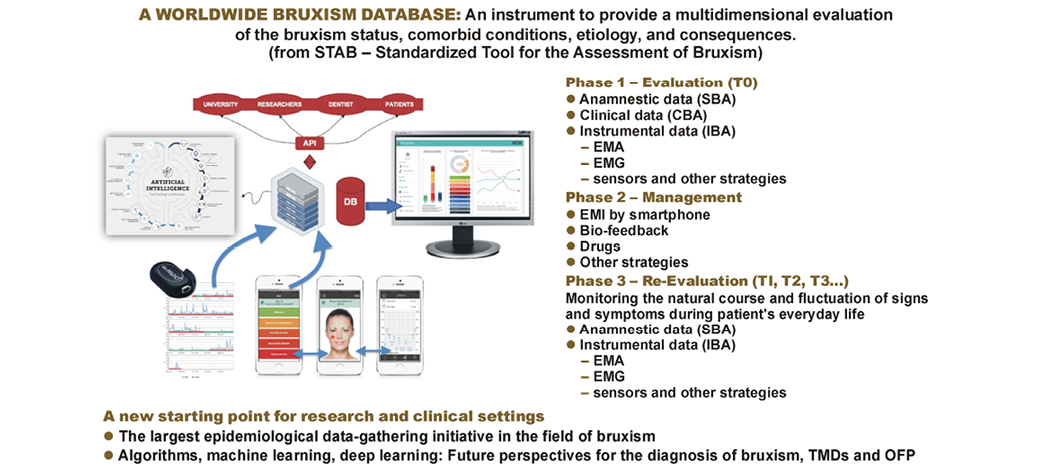
Traditional diagnostic approaches for bruxism rely primarily on patient self-reporting and indirect clinical signs, such as tooth wear or muscle tenderness. However, these indicators show limited reliability in reflecting current AB behavior frequency and its daily variability.7 To address this, the Standardized Tool for the Assessment of Bruxism (STAB) has been recently developed to provide a multidimensional evaluation of bruxism.8 Among its various axes, there is a growing demand for tools capable of capturing the continuum of the bruxism experience in real-life contexts, thereby minimizing the recall bias.9 Such tools align with the “4A” principle suggested by the 2018 consensus panel: Awareness (of the behavior); Avoidance (of the behavior); Action (taking steps to change); and Accommodation (physiological adaptation).9, 10
While the technological framework of the BruxApp Cloud platform addresses these clinical and research needs through the smartphone-based ecological momentary assessment (EMA) and cloud-based data management, its scientific utility in international settings depends on accurate cross-cultural implementation. For a digital health tool to generate reliable epidemiological data, it must be linguistically and conceptually adapted to the target population, particularly when it is used to facilitate ecological momentary interventions (EMIs) aimed at promoting the functional mandibular rest position.11 Despite previous research on bruxism in Poland, a formally validated Polish version of this cloud-based system was lacking. Therefore, the present study describes the methodological framework for the linguistic validation and cultural adaptation of the Polish version of BruxApp Cloud, providing the necessary foundation for future clinical and psychometric evaluation of the platform’s utility.
Material and methods
Study design
This methodological study focused on the linguistic validation and cultural adaptation of the Polish-language version of the BruxApp Cloud platform. This phase represents the qualitative foundation of the validation process, ensuring conceptual equivalence before subsequent psychometric testing. The translation process followed the internationally accepted principles for the cross-cultural adaptation of digital health tools, as applied in EMA-based bruxism research.12 The entire process, from the initial forward translation to final reconciliation, was conducted over a 6-month period.
Source material
The source material comprised all textual elements embedded in the BruxApp Cloud mobile application, including EMA questions, system notifications, instructional texts, behavioral feedback messages, and user-interface labels. These elements are integral to real-time monitoring of AB behaviors and to cognitive-behavioral re-education.8, 9, 10, 11, 12
Translation and linguistic validation
The translation and cultural adaptation of the Polish version of BruxApp Cloud followed a rigorous, multi-step protocol designed to ensure semantic, idiomatic, experiential, and conceptual equivalence, in accordance with the methodological standards established in previous studies.13
All translation procedures were performed using a dedicated cloud-based platform (POEditor), with English serving as the reference language.
The linguistic adaptation of the instrument involved a rigorous translation process initiated by 2 bilingual native Polish speakers who worked independently. To minimize the potential bias and ensure that the content would be understandable to a general audience, the translators had different levels of subject-matter expertise: one was a specialist in bruxism, whereas the other was a “naive” translator with no professional knowledge of the subject. The two forward translations were subsequently reconciled by the Polish project coordinator to produce a single unified version. This version was then independently back-translated into English by 2 bilingual native English speakers who had basic knowledge of bruxism, but had not been exposed to the original source text.
A comparative analysis was then conducted by one of the original creators of BruxApp, who compared the back translation with the original English version. Any identified inconsistencies were documented, and the affected items underwent additional rounds of forward and back translation until the discrepancies were resolved through an independent review. In the final stage, a multidisciplinary committee comprising a Polish language expert, 2 clinicians specializing in bruxism and temporomandibular disorders (TMDs), and 2 laypeople (one monolingual and one bilingual) evaluated the Polish version. Based on the criteria described in previous research,13 the committee assessed 4 specific types of equivalence: semantic; idiomatic; experiential; and conceptual. Consensus was reached through an iterative process, with discrepancies discussed until all committee members agreed on the final Polish phrasing. The final version was established following the confirmation of the alignment between the back-translated and original English versions. The resulting Polish version of BruxApp Cloud was considered a linguistically validated tool, and was deemed ready for subsequent clinical and psychometric testing phases.
Cultural adaptation and finalization
Special attention was given to linguistic nuances that could influence patient comprehension and engagement. Instructions and feedback messages were adapted to natural Polish phrasing while preserving their original behavioral intent.12 This phase focused on establishing linguistic equivalence and represents the foundational stage of the validation process; further quantitative assessment and pilot testing with patients are planned for a subsequent implementation phase.
Results
The linguistic validation and cultural adaptation process resulted in a Polish version of the BruxApp Cloud platform that demonstrated full conceptual equivalence with the original English source version. During the reconciliation phase, several items were identified as requiring specific linguistic adjustments to balance clinical precision with patient-centered clarity (Table 1).
The final back translation demonstrated 100% conceptual alignment with the original English version. These findings indicate that the Polish version of BruxApp Cloud has achieved the necessary linguistic and cultural equivalence for use as a reliable instrument for real-time monitoring of AB behaviors in the Polish population. However, this equivalence represents a qualitative baseline, and the usability and user-interface experience of the Polish version should be further evaluated in clinical settings.
Discussion
The present study builds upon the foundational work conducted by Osiewicz et al. in 2019, which introduced the first Polish version of BruxApp.12 However, the present contribution should be regarded as a comprehensive revalidation and technological evolution of the application. Whereas the 2019 version focused on a basic standalone application, the current study adapts the BruxApp Cloud platform, which incorporates complex new features, including real-time data synchronization, advanced system notifications, and behavioral feedback modules (EMI) that were not available in the earlier version. This substantial technological development necessitated a new and rigorous linguistic validation process to ensure that the interactive components and the cloud-based user interface maintain full conceptual equivalence within a multidimensional clinical environment.
The translation process itself presented specific challenges, particularly in translating behavioral intervention terminology into Polish while preserving the original intent. For instance, the distinction between “clenching” (zaciskanie) and “bracing” (napinanie żuchwy) was strictly maintained in accordance with the international consensus on bruxism assessment, thereby preventing the conceptual overlap often encountered in general Polish clinical terminology. Adapting user-interface labels and feedback messages required a balance between clinical precision and natural Polish phrasing to promote user engagement, which is critical for long-term adherence to the EMA protocols.
Originality and technological innovation
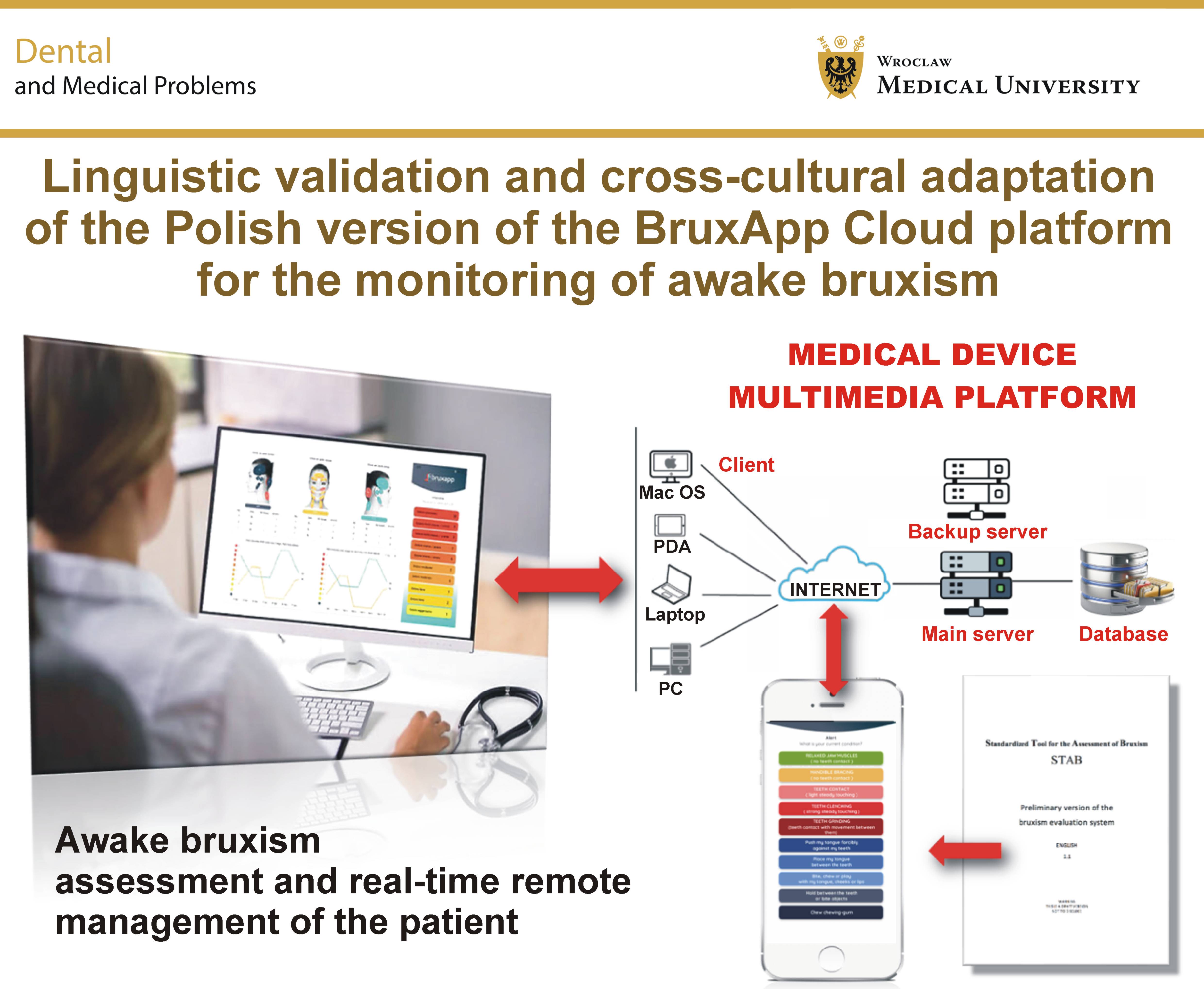
The originality of BruxApp Cloud lies in its ability to systematically collect real-time data on jaw and oral behaviors during daily life over an extended and continuous period. It employs the EMA and EMI strategies, which have been widely described in the literature,9, 10, 11, 12, 13, 14, 15 and applied in dentistry in the context of bruxism and TMDs, as described in STAB, an international reference tool for bruxism assessment. Through randomized alerts delivered via a smartphone application, users are prompted to report their current oral behaviors (e.g., a relaxed jaw, tooth contact, clenching, bracing, and tongue activities), thereby minimizing the recall bias and enhancing ecological validity.8, 9, 15 In addition, patients can report the presence of pain in different facial areas and indicate its corresponding intensity.
The smartphone application is downloaded by the patient following the clinician’s prescription and is used for a minimum of 7 days to record instantaneous AB conditions at baseline (T0). This EMA protocol typically involves a randomized schedule of alerts (e.g., 20 per day) to minimize predictability and capture authentic behavioral snapshots.16, 17 The application communicates directly with the server, allowing the clinician to receive real-time data from patients through a personal dashboard designed to manage and monitor patient progress. After the first assessment at T0, the clinician prescribes cognitive-behavioral re-education sessions based on the EMI strategies, which are continuously available within the patient’s application. Following the appropriate re-education sessions, the clinician can prescribe further monitoring sessions at T1, T2, etc., to assess behavioral trends, patient progress and symptomatic improvement within a structured follow-up framework (Figure 1).
The cloud-based infrastructure has been certified in Europe as a Class I medical device and complies with the strict requirements of the European General Data Protection Regulation (GDPR) concerning the processing and protection of health data, thereby enabling secure data storage and remote access by clinicians. In this way, the BruxApp Cloud platform has evolved into an innovative telemedicine and teledentistry system suitable for continuous monitoring, individualized behavioral re-education and longitudinal follow-up by clinicians and researchers, in a simple and cost-effective manner.
Clinical implications
Bruxism and dental rehabilitation
Awake bruxism, recognized as a muscle behavior, is primarily associated with orofacial muscle discomfort and tension-type headaches, while its correlation with clinical tooth wear is considered minimal.18 EMA-based monitoring allows clinicians to identify high-risk behavioral patterns and implement preventive strategies before irreversible damage occurs.8 A validated Polish version of BruxApp Cloud shows genuine promise for everyday practice, as it enables Polish-speaking clinicians to prescribe remote behavioral monitoring, longitudinally track jaw activity patterns, and deliver biofeedback-based interventions within a GDPR-compliant framework. This follow-up structure, involving baseline (T0) and subsequent reassessments (T1, T2), is consistent with standard conservative behavioral re-education protocols for TMDs and bruxism.
However, it is important to emphasize that the absence of clinical testing in the present study means that clinicians cannot yet determine whether Polish patients find the application fully comprehensible in a real-world setting. Furthermore, it remains to be established whether the adherence rates among Polish users will be acceptable and whether the behavioral outcomes observed in other language populations can be successfully replicated in Polish-speaking cohorts.
Temporomandibular disorders and orofacial pain
Most TMDs and associated orofacial pain (OFP) conditions are considered musculoskeletal overload conditions in which sustained teeth clenching and jaw bracing play key roles.2, 13, 19, 20 BruxApp Cloud enables individualized monitoring of these behaviors, supporting conservative, behavior-oriented monitoring strategies,8, 19, 21 as recommended by international guidelines for good clinical practice. Furthermore, the use of EMA data helps clarify the relationship between painful symptoms and daily oral behaviors, supporting more precise and personalized treatment planning for patients suffering from muscle-related facial pain and tension.
Behavioral monitoring and follow-up
Beyond monitoring, the BruxApp Cloud application incorporates a cognitive-behavioral re-education component. Repeated alerts, in the form of positive biofeedback, increase patient awareness of jaw posture, and encourage the maintenance of the functional mandibular rest position and of the facial musculature in general. Clinicians can remotely monitor behavioral changes and adjust the monitoring strategies based on objective longitudinal data,8 as well as modify the therapeutic pathway according to patient outcomes and response.
Implications for research and telemedicine
In addition to its clinical application for dental practitioners, the BruxApp Cloud platform includes a dedicated version exclusively designed for research settings and academic institutions.
BruxApp Cloud provides a standardized methodology for collecting large-scale, ecologically valid data on AB, supporting epidemiological studies and clinical trials.8, 9, 10, 11, 12, 13, 14, 15, 16, 17, 18, 19, 20, 22 As a telemedicine tool, it aligns with contemporary healthcare models that emphasize remote monitoring, patient engagement and data-driven clinical decision-making.9
Limitations
A significant limitation of the present study is the lack of empirical field testing, such as cognitive debriefing or pilot testing in a clinical population. While the multi-step linguistic validation process ensured that the translation is conceptually and semantically sound, the study does not yet provide data on patient adherence or the practical usability of the interface. Potential issues, such as digital literacy barriers among older patients or population-specific differences in comprehension (e.g., regional linguistic variations within Poland), were not specifically addressed at this stage. Therefore, the findings should be considered an essential qualitative foundation for future quantitative research evaluating the psychometric reliability and clinical efficacy of the application among Polish patients with various types of bruxism and TMDs.
Conclusions
The Polish version of BruxApp Cloud has achieved high linguistic and conceptual equivalence with the original English version. While this study represents a preliminary linguistic validation and does not yet address clinical adherence or real-world patient comprehension, it provides the necessary foundation for future clinical testing. The validated version provides a standardized tool that is now available for future empirical research and clinical trials aimed at establishing its psychometric properties and clinical utility in the Polish population, ultimately supporting the implementation of objective behavioral monitoring within a teledentistry framework.
Ethics approval and consent to participate
Not applicable.
Data availability
The datasets supporting the findings of the current study are available from the corresponding author on reasonable request.
Consent for publication
Not applicable.
Use of AI and AI-assisted technologies
Not applicable.